Visit Listing with Links
2025
2024
- Goto Wakefield Grand Theatre 07/10/24
- Goto Sheburn in Elmet 07/07/24
- Goto Kirstall Abbey 06/06/24
- Goto Clarence Dock 08/05/2024
- Goto Leeds Minster 10/04/24
- Goto Safeguarding Garforth Historical Soc. Archv
2023
2022-2019
- Goto York Walls 03/22
- Goto Kippax Coal Mining Exhibition 11/21
- Goto Kippax History Walk 10/21
- Goto Treasures of Templenewsam 20/06/21
- Goto Yorkshire Battles 12/05/21
- Florence Nightingale Talk 25/11/20
- Goto Bolsover Castle 26/02/20
- Goto Lotherton Hall 21/08/2019
- Goto Selby Abbey 10/07/2019
- LCC Secret Libraries
- Micklefield Pit Disaster 1896
- Lockdown Miscellany June 2020
Peckfield Mining Disaster
Augstus Walker Blue Plaque
Around Moorland Terrace
Chantry Chapel of St Mary the Virgin, Wakefield
Kippax Castle, Kippax
Manor Farm Experimental Agricultural College
St Mary's Parish Church, Whitkirk 13th August 2025
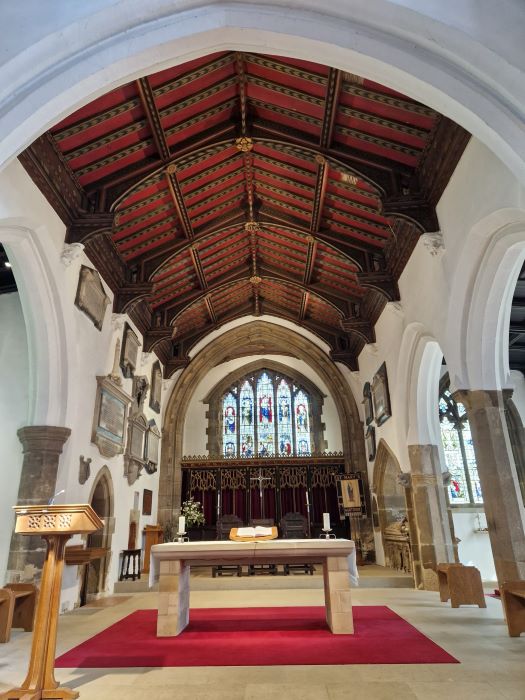
On one of the hottest days of the year (13 August) the History Group made a wise decision to visit the welcome coolness of the parish church of St Mary's in Whitkirk.
The first mention of a church on the site is in the Domesday Survey of 1086 when the land was owned by Ilbert de Laci. The name Whitkirk seems to have derived from the term White Church which was used to describe the stone built church when the lands were given to the Knights Templar between 1154 and 1166.
The early 11/12th century church would probably have had a rectangular chancel and unaisled nave such as still exists at nearby Kippax. Extensive remodelling took place in the 15th century after which the church remained largely unaltered until being completely restored and refurnished in 1855-56. Structural faults with the flooring required major interior restoration in 1979-80.
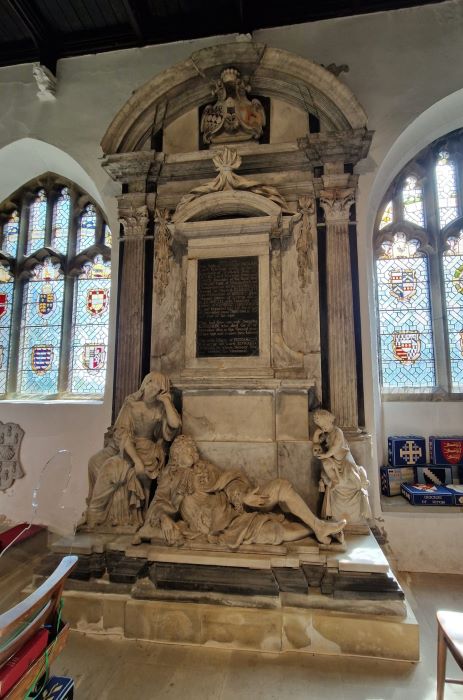
The South chapel is the burial place of the Ingrams (builders of Temple Newsam) and the Irwins (who remembers the Irwin Arms pub which stood where Lidl Halton is now?) and there are several impressive memorials to both families in the church.
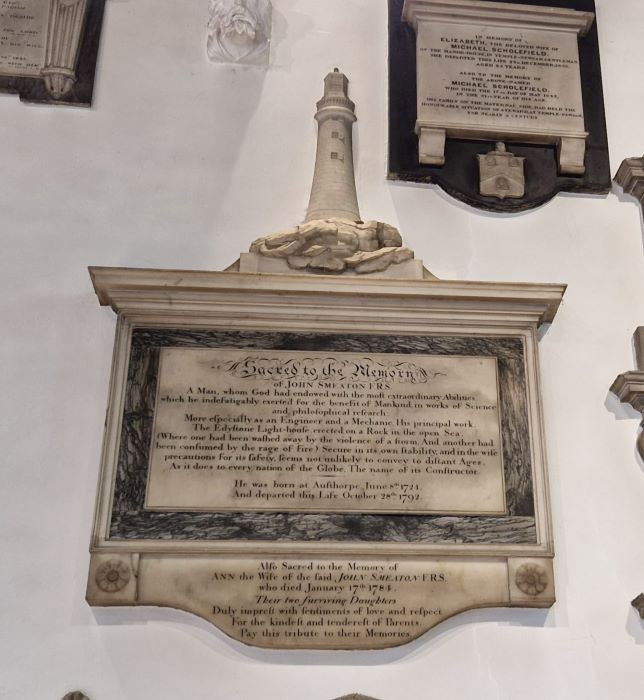
Of particular interest in the chancel is the memorial to John Smeaton (1724-92) who lived at Austhorpe Lodge (now demolished). The tablet shows the Eddystone Lighthouse, designed and built by him. He and members of his family are buried in the chancel.
At the entrance to the church grounds stands the Lychgate which is a memorial to the men and women who gave their lives in the two World Wars. It includes stones (suitably marked) from the bombed buildings of the Houses of Parliament, St Paul’s Cathedral, Coventry Cathedral, Leeds Town Hall and Leeds Museum. The roof, trusses, gates and posts are made of teak from Royal Navy ships.
Many of our group had attended weddings, christenings, funerals etc at Whitkirk but this was the first time that most of us were able to fully appreciate all that St Mary's had to offer.
St Aidan's July 2025

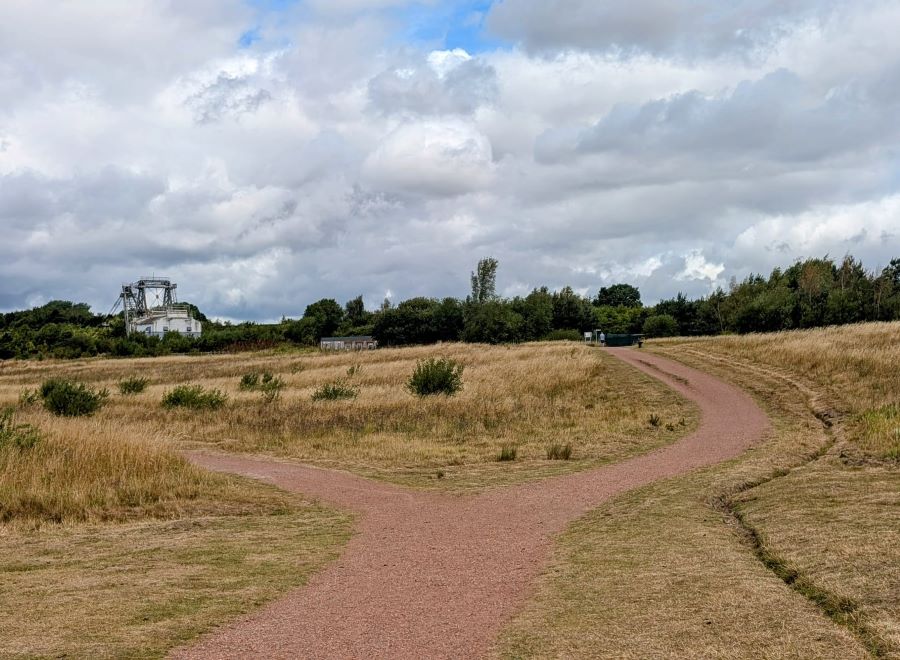
In July, one of our History Group members led us on a walking tour around St Aidens nature reserve to explain the long and varied history of the site.
The area around St Aidens has likely been occupied for thousands of years, initially by primitive ferns, mosses and coniferous plants amongst the swamps, as evidenced by fossils found on site. Around ten thousand years ago the River Aire carved out the Lower Aire Valley and the St Aidens area became a flood plain, probably full of mammals such as otters and beavers building dams and creating wetlands, forming carbon and peat.
Six thousand years ago humans would have begun small scale farming of crops and animals and creating small communities nearby. By 1085 the Doomsday Book shows that Swillington, Garforth, Allerton Bywater and Kippax were established and it is known that mining existed in the area by 1410 as the Vicar of Kippax was paid in tithes of coal. Bell pit mining was common in the Middle Ages and there is evidence of this in Hollinghurst woods nearby.
Sir John Lowther bought the land in 1656 because of the abundance of coal and limestone in the area and later leased the mines to Joshua Bower who employed the miners who did the work. In the 1870s Bower built Bowers Row to house his workforce - 120 tiny terraced properties along with a school and chapel but no pub! The newer version of the church, built in 1927, still stands on Queen Street today.
Opencast mining began in 1948 and the whole site was laid waste by the mighty 'Oddball' excavating dragline machine which gouged the coal from the landscape. Whilst some evidence of this time remains (rail tracks, slag heaps etc), sadly the small village of Astley was eaten up in the pursuance of coal.
There was a well known River Aire breach at the site in 1988 when it took three days for the whole site to fill with water and the current was so strong that the river began to flow backwards as it pulled water from the River Calder just downstream. Despite a ten year effort to repair the damage at a cost of £20million, the open cast mineworks closed for good in 2002.
In 2017 the RSPB took over management of the site and it's history is remembered in the naming of Lowther lake and Bowers lake. Whilst it looks natural, the whole site of lakes, islands and hillsides was man made during the site renovations after mining ended. it is now a very popular nature reserve and a haven for wildlife which is well used by humans and migratory and nesting birds alike!
Lawnswood Cemetery - June 2025

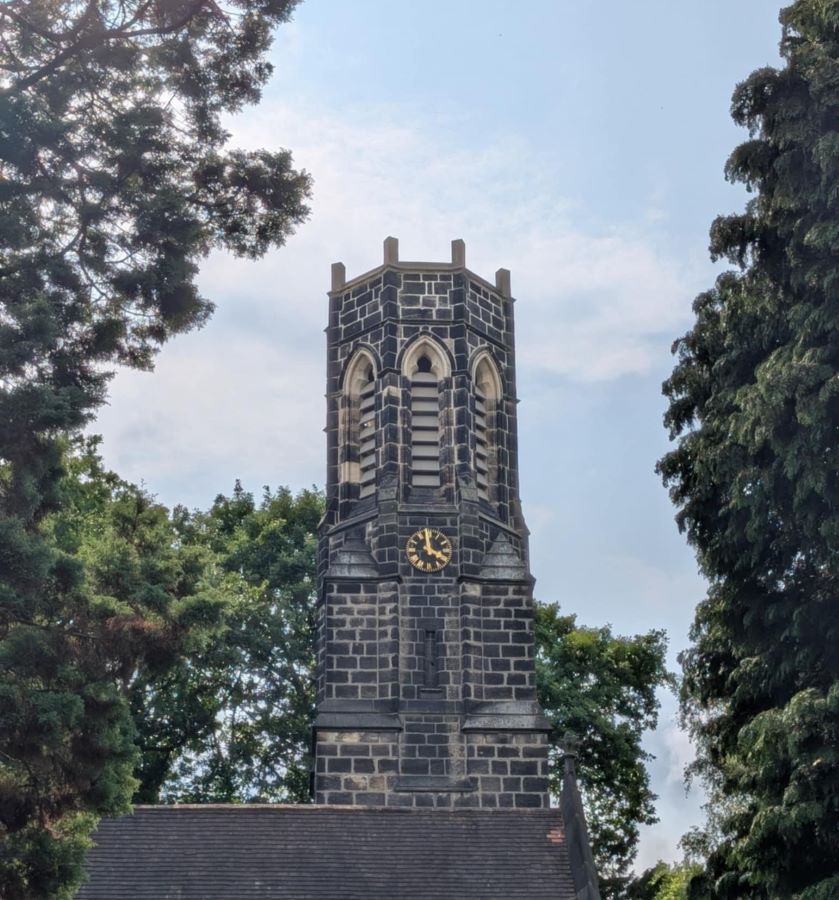
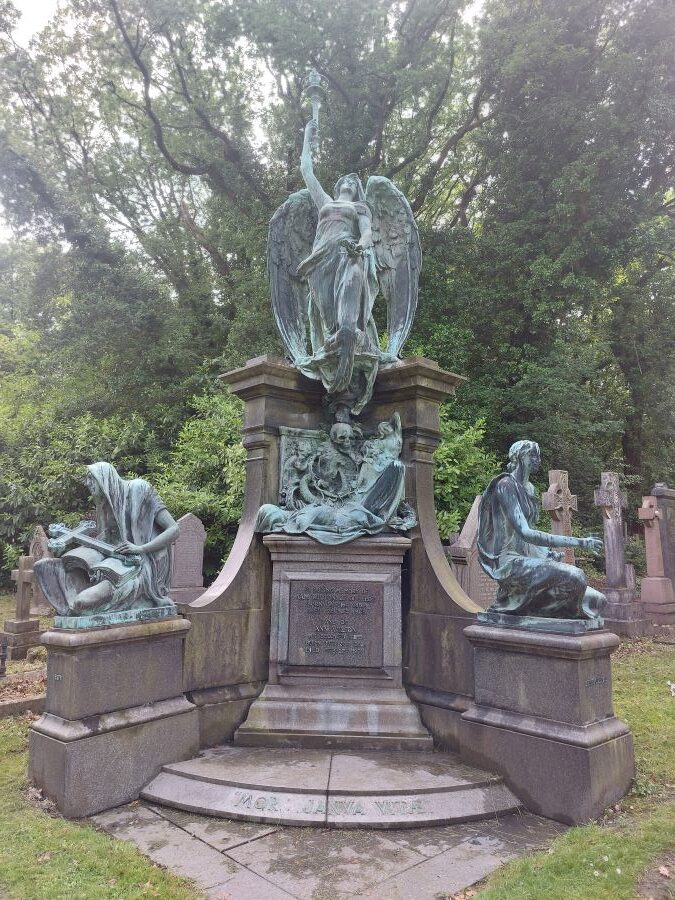
On a very wet afternoon in June the History Group took a History tour of Lawnswood Cemetery. As a consequence of the local urban churchyards reaching capacity, the decision was taken to purchase the Lawnswood site and George Corson, the noted Leeds architect, was chosen to design the lodge and chapels (one conformist and one non conformist) and also the layout of the cemetery (Click to Toggle to read more).
Lawnswood opened in 1875 and on 31 December of that year the Church of England section was consecrated by the Bishop of Ripon. The first burial, that of Henry Sharp, took place on 23 January 1876.
Following the legalisation of cremation in 1884, the crematorium part of the cemetery, designed by W S Braithwaite, opened in 1905 at a cost of £3000 and was the first in Britain to use a gas cremator. The first cremation, that of John Dunbar Steen of Guiseley, took place on 4 January 1905. However, cremations did not become commonplace until after WWII. The crematorium is, of course, still very much in use today and the chimney, sensitively disguised as a clock tower, underwent extensive repairs in 2010.
Lawnswood is home to some unusual memorials, perhaps the most famous being that of Ethel Preston who died in 1911. Her grave marker shows the lifesize figure of Ethel standing on the porch of her home, Grange House in Beeston (now demolished). The monument drew huge crowds and special trams were laid on to meet demand. Police marshalled the queue of visitors and a café was opened at the tram terminus!
Another impressive monument is that of Sam Wilson, JP of Leeds, which has figures representing faith, hope and benevolence plus a central panel depicting the vices of earthly life left behind (riches, women, drink etc).
There is a large columbarium (structure for the public storage of funerary urns holding cremated remains) and also a WWI war graves plot as well as many WWII memorial markers throughout the cemetery.
Lawnswood is now designated as a ”Park or Garden of Special Historic Interest” with Historic England, and contains Grade 2 listed buildings and monuments. It has expanded over the years to its current size of 53 acres with many beautiful trees and is a haven for wildlife.
Sunny Bank Mills Museum and Archive - May 2025
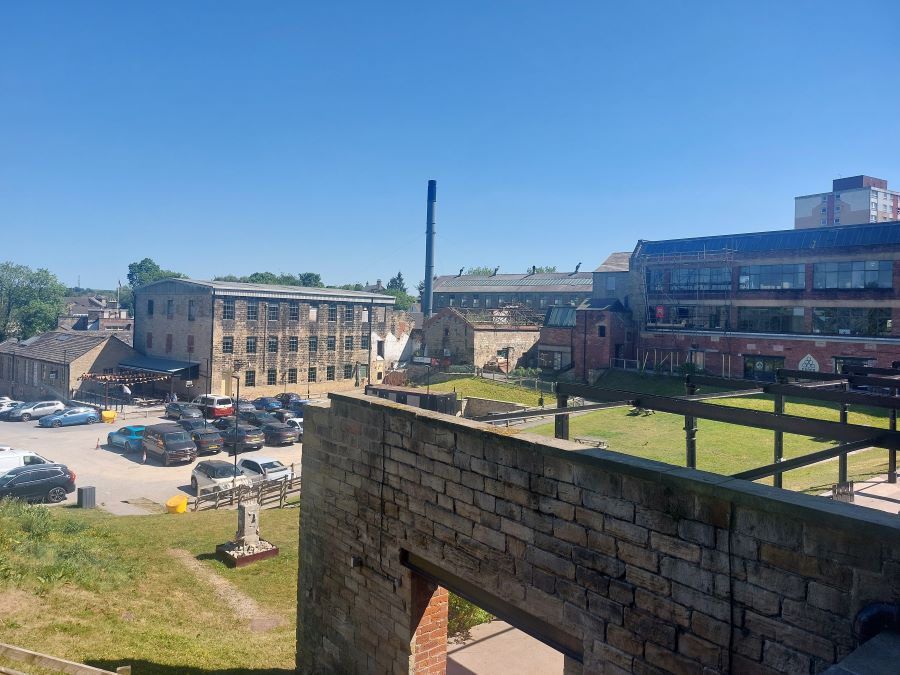
In May the History Group took a tour of the Museum and Archive at Sunny Bank Mills in Farsley near Leeds. It contains more than 60,000 lengths of cloth, 8,000 fabric designs plus numerous artefacts left from nearly 200 years of cloth production, all preserved from when the mill closed. A highlight is the collection of 'Guard' books which are reference books detailing cloth production designs from 1829 until 2008, recorded by both year and season
Sunny Bank Mills was founded in 1829 by a group of local clothiers who clubbed together to buy land and build a woollen scribbling and fulling mill, known as The Farsley Club Mill. In 1882 Edwin Woodhouse purchased the site and greatly expanded it to include spinning and weaving worsted. Edwin added the last building to the site in 1912 and it is this building which has been used to film both Emmerdale and Heartbeat, plus a certain popular BBC sewing competition! With no son to leave the Mill to, Edwin sold it and by 1917, after two more owners, the Mill had become renowned for producing fine worsted cloth, helped by the soft water in West Yorkshire. At it's height, the Mill employed 900 workers and one of our group has a cousin who is able to share stories of her time working there!
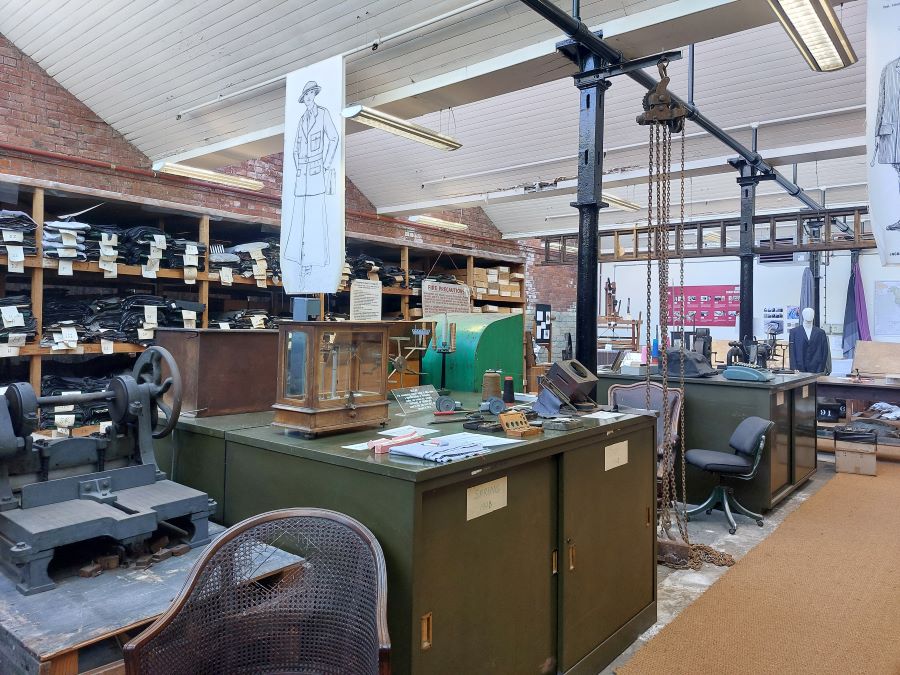

WW1 led to rapid expansion in the Mill's production levels, including government contracts to supply cloth for military uniforms but the stock market crash of 1929 meant owner W C Gaunt lost almost every penny of his wealth. However, by 1943 Gaunt's son was able to settle all the debts and regain control of the Mill.
The 50s and 60s led to great prosperity for the Mill, including building an export business, particularly with the Middle East. But once again, fate intervened as sales fell significantly during the 1990 Gulf War and the Mill sadly never fully recovered. In 2008 production of fine worsted cloth finally ended at Sunny Bank Mills after 180 years.
The Gaunt family still own the site and in recent years it has been regenerated and is now home to 75 businesses and employs over 350 people, as well as being home to the Sunny Bank Mills Museum and Archive.
Wakefield Cathedral 8th April 2025
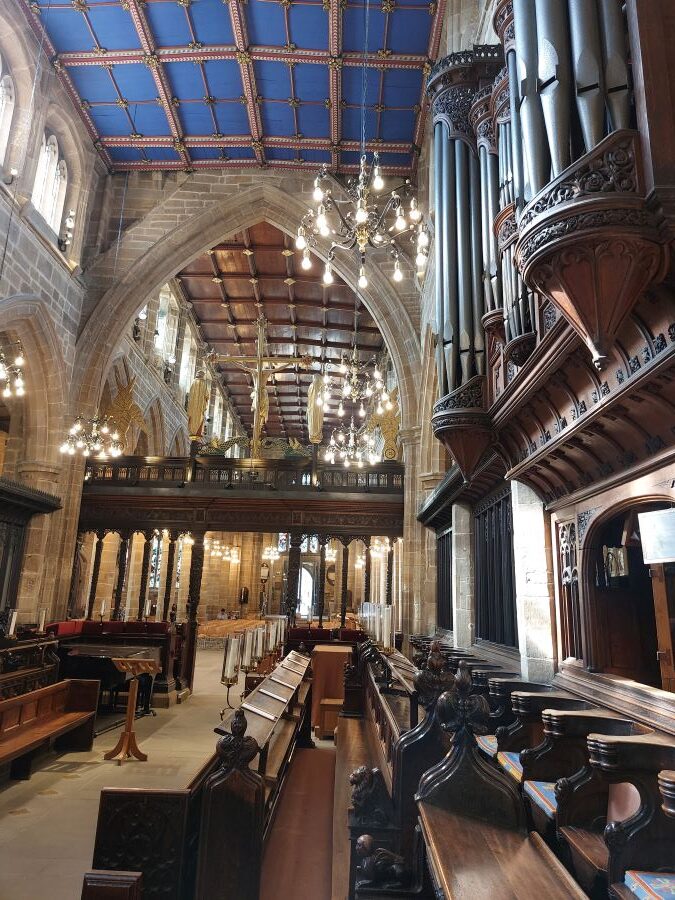

On a very sunny day in April the History Group took a tour of Wakefield Cathedral. It is built on the site of a Saxon church, evidence of which was uncovered in 1900 when extensions to the east end were being made. There was a church in Wakefield mentioned in the 1086 Domesday Book and in 1090 William II gave the church and land in Wakefield to Lewes Priory in Sussex. Shortly after that time a Norman church was built.
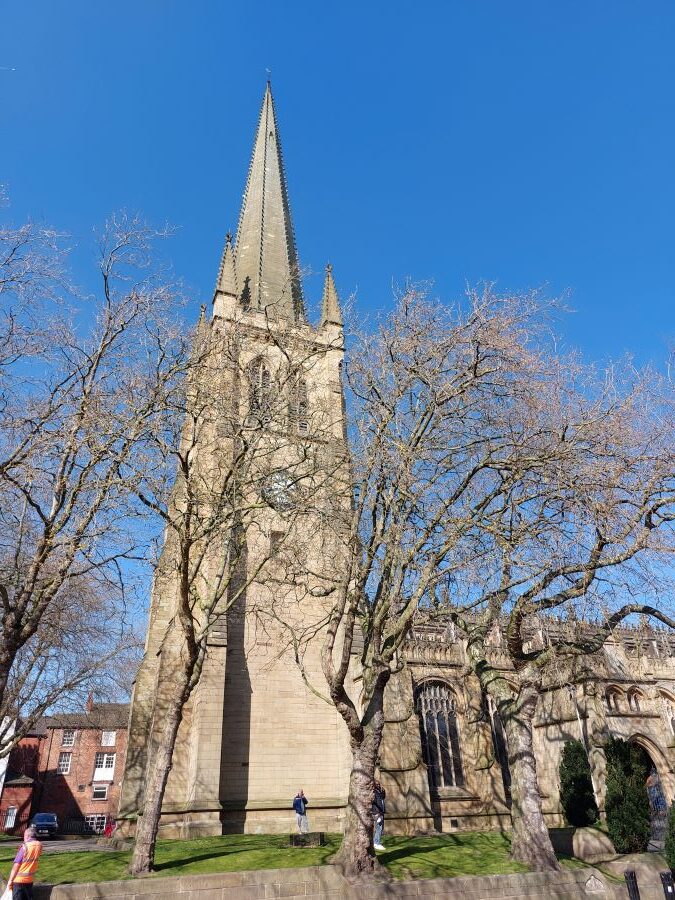
By 1420 the Western Tower and spire had been added, however after years of neglect and a violent storm it had to be rebuilt in 1860. At 247ft high (or 75 metres), it is the tallest church tower in the whole of Yorkshire. In recent years a family of peregrines have made the cathedral tower their home, fledging over twenty chicks in this time.
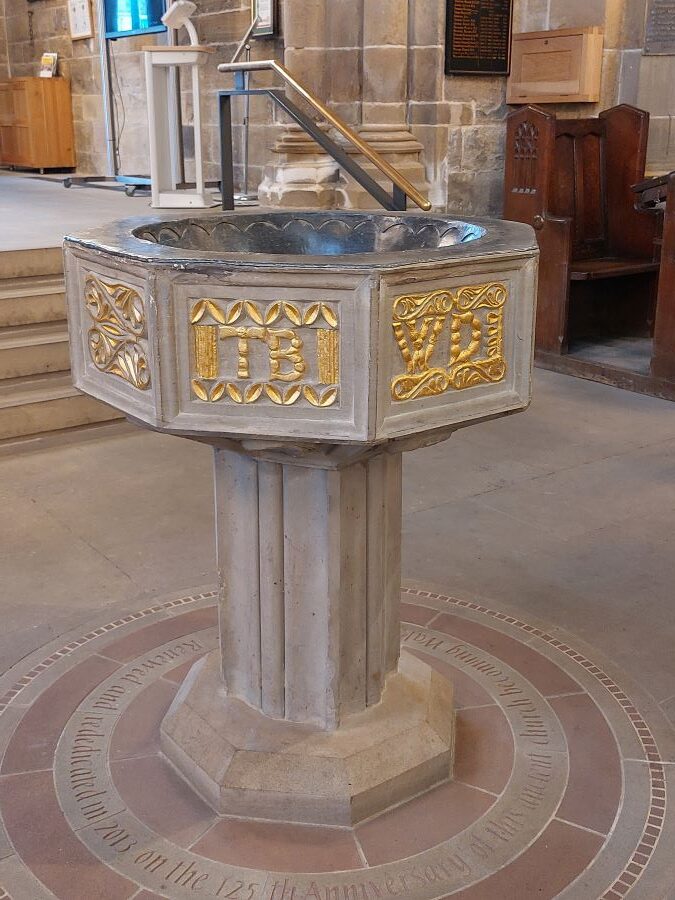
Up to the 16th century the church was known by the Anglo Saxon name “All Hallows” but after the Reformation it became known as “All Saints” as it remains today. In 1661 the cathedral font was installed, replacing the medieval font destroyed by Oliver Cromwell during the commonwealth period.
The original Saxon cross from the late 10th century was discovered in 1861 being used as a door step at a local barber’s shop but thankfully it is now situated at the Wakefield Museum!
Restoration work was headed up by Sir George Gilbert Scott (of Albert Memorial and St Pancras Station hotel fame) and his son, John Oldrid Scott - the cathedral as we see it today owes its current late medieval appearance to this restorative work. It became a cathedral in 1888.
Between 2012 and 2016 a £6.5million restoration of the cathedral took place including a new stone floor and underfloor heating, steam cleaning of walls, new electrics and seating plus an impressively modern multi functional oak pulpit.
The Group was fortunate to also enjoy a free concert of choral singing which took place just prior to our cathedral tour. A bonanza of culture all in one day!
Castle Grove Masonic Hall
12th Feb 2025
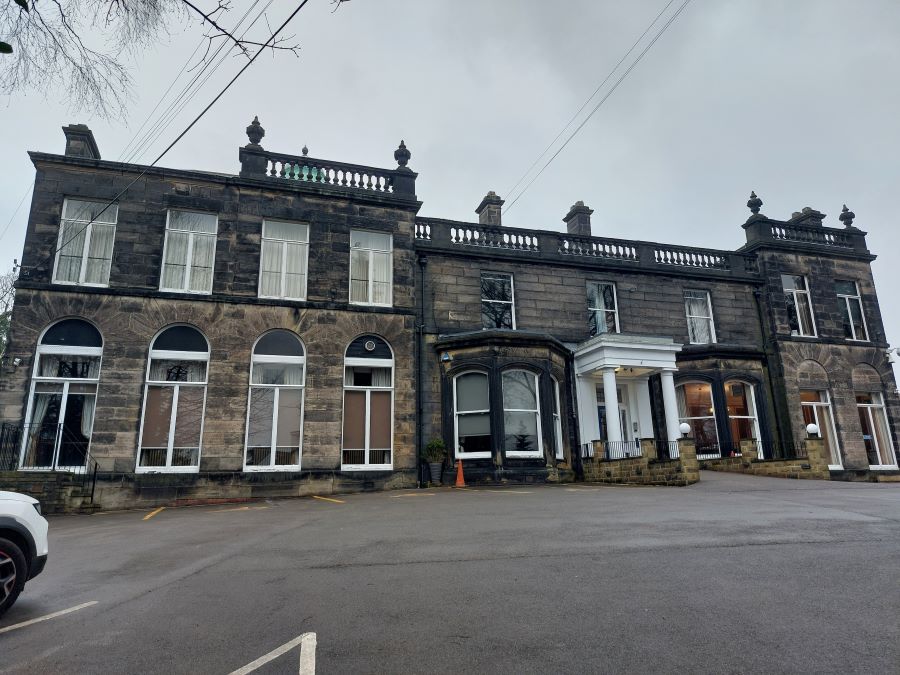
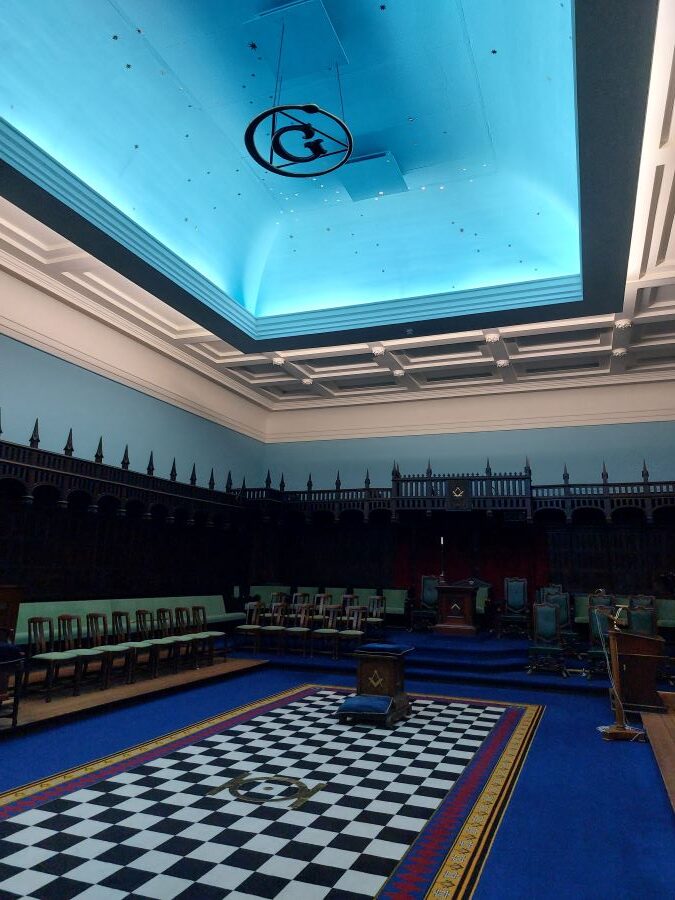
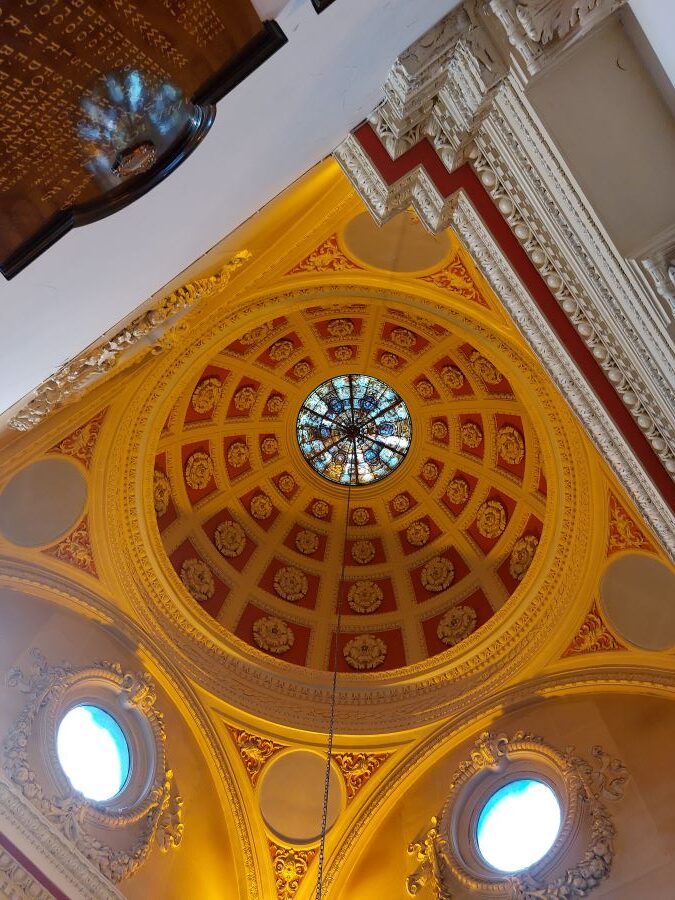
In February (and repeated with a second group in March!), some of our History Group members took a tour of the striking Grade II listed Castle Grove Masonic Hall in Headingley. It is a place few of us had previously heard of, yet the original property was built as early as 1834. The initially modest house was built by linen merchant, Samuel Holmes, and comprised only of 4 main rooms with stables, domestic quarters and cellars at the rear. Subsequent owners enlarged the property but in 1896 Mr John Kirk JP removed the earlier extensions and built a grand central salon with a rear semi circular bay looking North up the valley of Stainbeck Road. A new billiard room looked East along Meanwood Valley into Leeds. He also created a fabulous first floor balcony and staircase which led to eight bedrooms and an impressive domed ceiling. A stable block, large greenhouse, croquet lawn and gatehouse completed the estate. The architect T Butler Wilson (who also designed Wheatfields) had expert plasterers in his family so this probably accounts for the elaborate plaster ceilings in several of the rooms. These, along with many original fireplaces, oak panelling, stained glass and the domed ceiling can all still be admired today.In 1920 Castle Grove was sold to Mr Bain, an ENT surgeon at Leeds Infirmary, then sold again to Leeds City Alderman Marshall Clegg. The estate land was eventually sold to build the Castle Grove housing estate in 1934 but the Hall itself was bought by the Freemasons and they continue to use it for their meetings to this day, as well as renting it out for private functions, weddings etc.

Wakefield Grand Theatre
7th Oct 2024
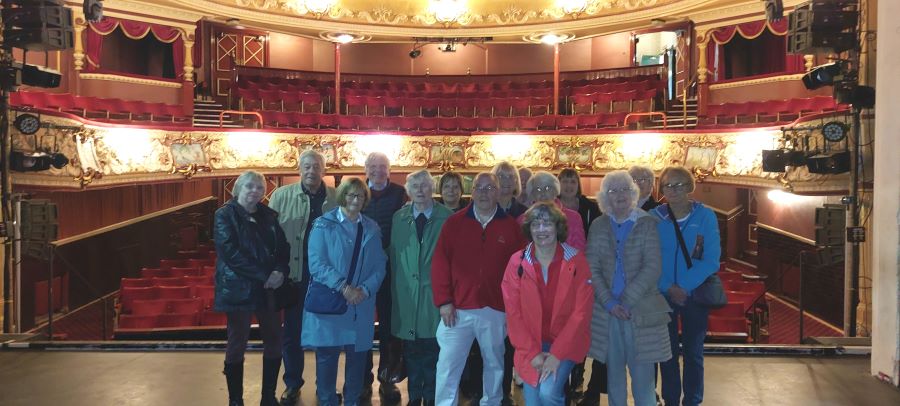
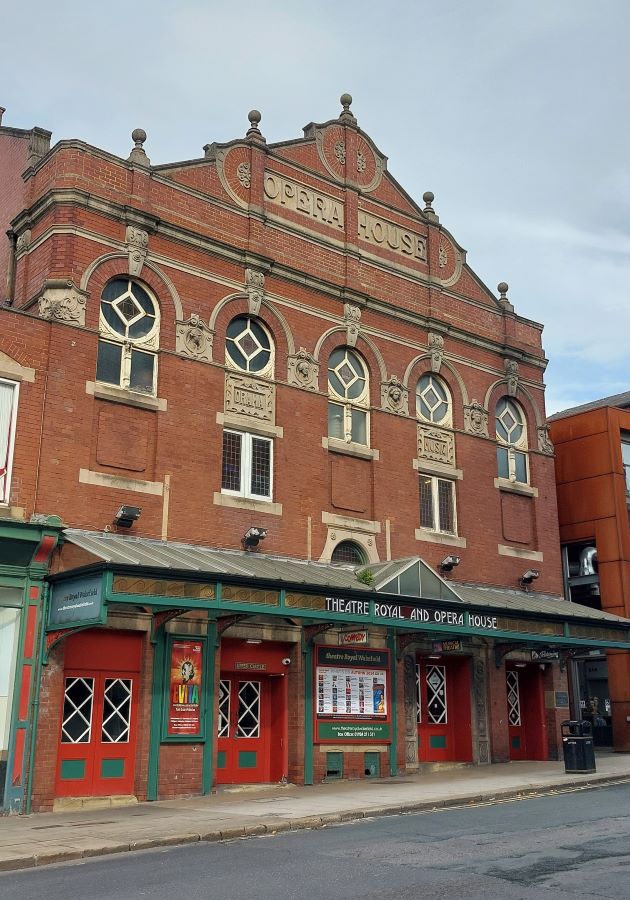
In October the History Group took a very enjoyable tour of the Theatre Royal in Wakefield. Designed by famous theatre architect, Frank Matcham, this Grade II* listed building, built in 1894, is the smallest surviving Matcham theatre auditorium. Amongst many other buildings, Matcham also designed County Arcade in Leeds and the Tower Ballroom in Blackpool.
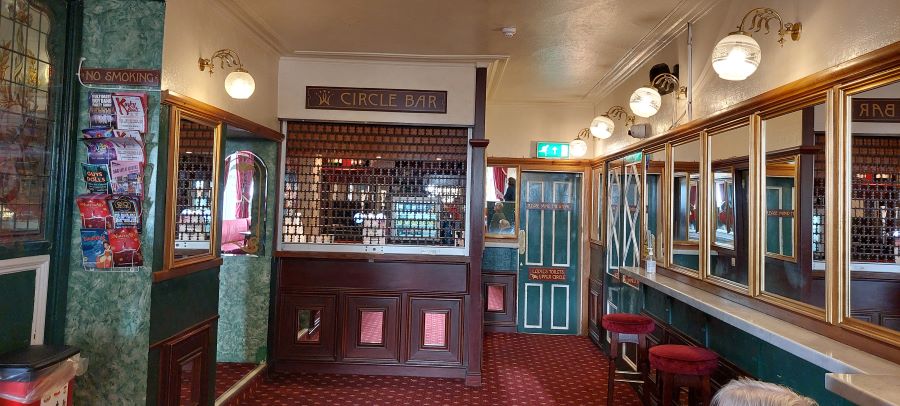
The Theatre Royal is a traditional Victorian theatre complete with 499 red velvet seats, curtains and even a couple of 'Royal boxes'. One of these boxes had doors direct into the Circle bar so it's incumbents could be first in the queue - sadly the doors are now sealed up! click to read more
The building is a rabbit warren of narrow steps and passages. We visited the fly loft where a myriad of ropes and pulleys allow the swift silent movement of backdrops, scenery, lights and sometimes people in and out of the stage. In times past, this job was often done by sailors who would already 'know the ropes' so wouldn't need to be taught. The view down onto the stage from this height is not for the fainthearted.
We made our way, via a surprisingly small backstage area, onto the stage where we could experience the raked floor. This, of course, is common in old theatres to allow the paying public a better view of what's happening towards the back of the stage, but it can prove tricky for a dancer to keep their balance, especially if en pointe.
Interesting fact: the prompt corner (the bit where the stage manager sits telling people what to do) is on the wrong side. In most theatres, as any thespians among you will know, it is stage left but here it is stage right, simply due to lack of space.
The theatre's popularity began to decline as television became more widespread and it eventually closed in 1954. It carried on as a cinema until 1966, then a bingo hall until the early 1980's. During this time, mercifully it's original features were covered over rather than being ripped out. When the danger of demolition loomed, it was saved by attaining listed status in 1979.
The theatre was brought back to life by a dedicated group of supporters who managed to raise enough funds for refurbishment to allow it to reopen as a live theatre venue in 1986. It has remained open since then (apart from Covid) and continues to thrive and it is well worth a visit.
Sherburn in Elmet 7th July 2024
The History Group recently took a historical walk round Sherburn in Elmet with Kevin Sibson, Chair of the Sherburn History Society.
There is evidence of a settlement at Sherburn from the 1st to 4th centuries CE but it seems to have flourished during the Roman occupation period, probably benefiting from trading opportunities with nearby Roman legions in Castleford and Tadcaster but after this it was abandoned completely.
Read More:-
The Kingdom of Elmet emerged in the 5th century and subsequently passed between various Kings and overlords to whom the local population had to pay rent in the form of food. It is likely around this time that the area was given the name Scireburn, meaning either bright stream or dividing stream in Old English.
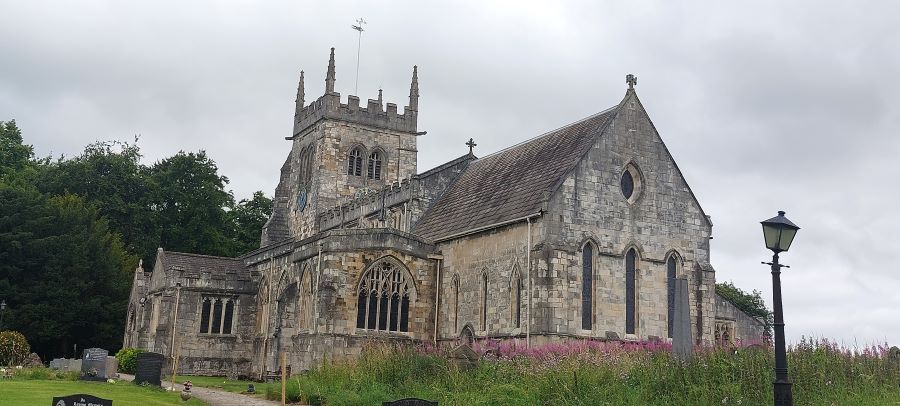
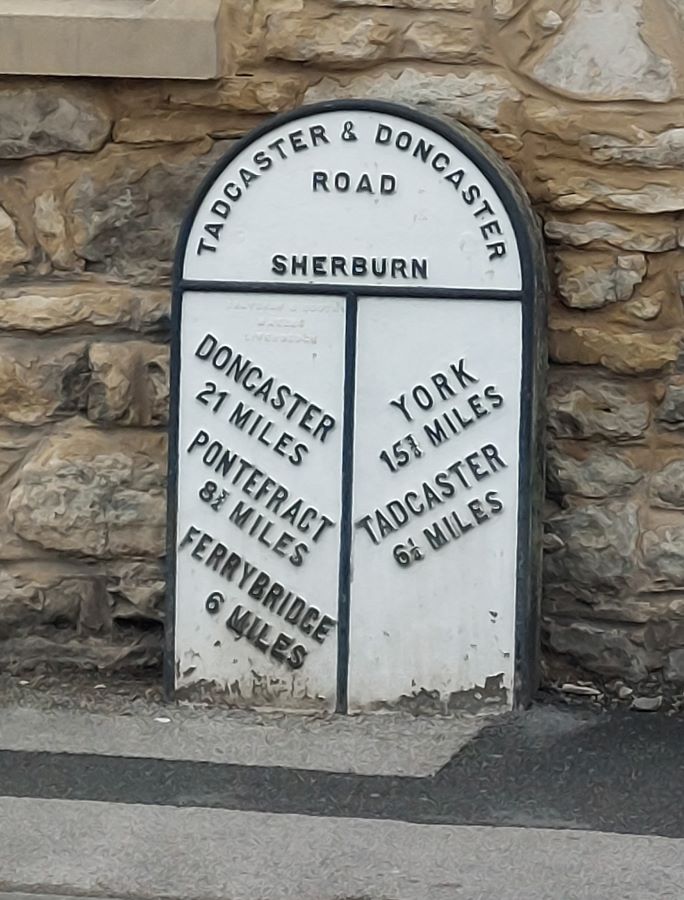
The hill at Sherburn offers a good view of surrounding country and there has been a church there since Saxon times. Even on a dull day, we were able to see the towers of York Minster around 15 miles away. Sherburn church is much larger than expected and was built in the 12th century. To its North is the site of a former Manor House or Hunting Lodge known as Athelstan's Palace - a location untouched and ripe for archaeological excavation one day!
Sherburn is set on a limestone ridge which extends all the way to Garforth cliff. There were many small quarries in the area and stone from here was used in both York Minster and Selby Abbey, apparently floated partially along the Ouse to its destination.
Spinning forward in time, in 1741 the ancient cart track through the village became a turnpike road. This led to the centre of Sherburn moving from the church area, down to the toll road to service the new coach traffic with food, drink and change of horses. Five coaches a day connecting to York and beyond meant up to 60 horses had to be stabled in the village - imagine the smell!
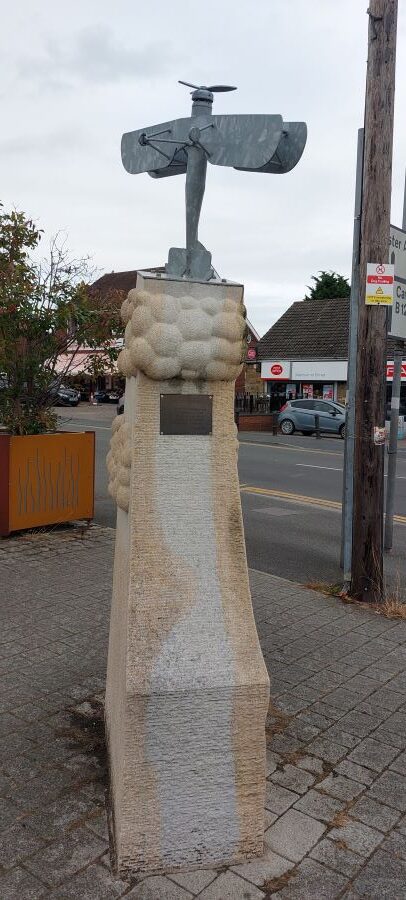
Within more recent memory, aviation has featured heavily in the area. The Blackburn Aircraft Company built and tested aircraft at Sherburn, producing an astonishing 1,699 Fairey Swordfish biplane torpedo bombers between 1941 and 1944 - a remarkable achievement which is commemorated by a sculpture in the village centre.

Kirkstall Abbey 6th June 2024
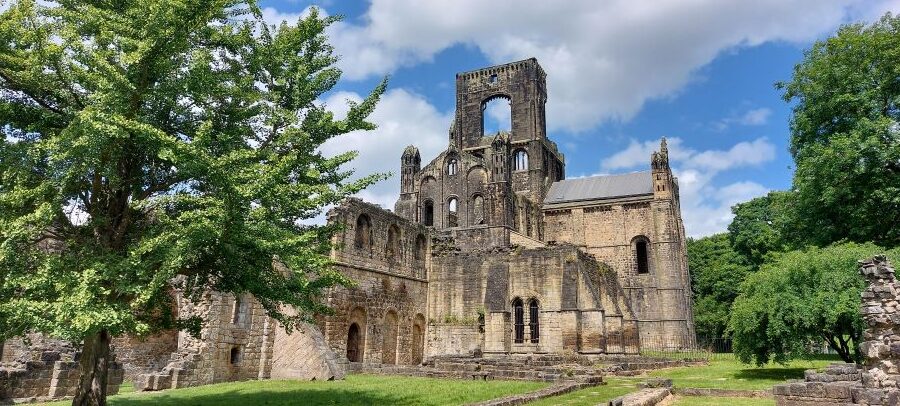
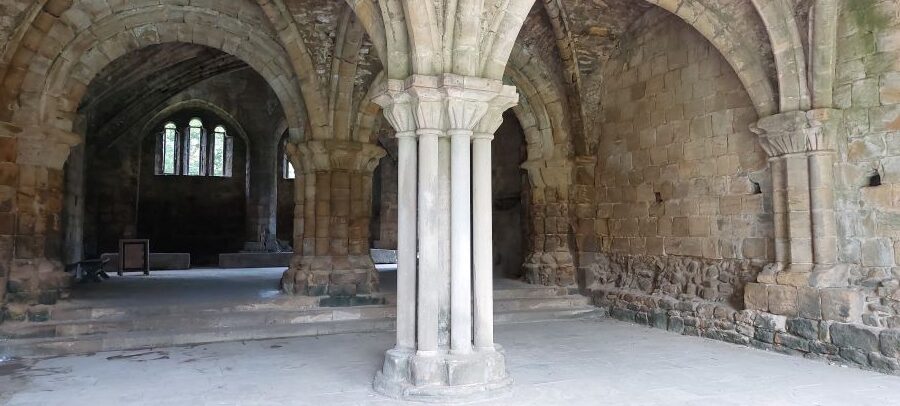
In early June the History Group took a guided tour of Kirkstall Abbey. An anticipated 40 minute tour soon turned into a facinating 1.5 hours learning about one of the most complete Cistertian monasteries in Britain.
A break away order from the Bendictines (they weren't strict enough!), the Cistertians founded their architecturally plain Abbey in 1152 and signified their devotion by wearing white woollen habits instead of black. Committed to prayer and hard work, the austere vegetarians attended 7 services in each 24 hours, ate only one simple meal a day and rarely had access to a warming fire. However they did benefit from relatively good herbal health care and excellent sanitation thanks to well engineered water flow throughout the site.
Gradually over time the Abbey grew rich on its massive land ownership and wool production and this inevitably led to the brothers relaxing their rules somewhat. More comfortable buildings with large fires and plentiful meat, fish and wine became the norm.
As we know, all this wealth eventually caught the eye of Henry VIII and in 1539 the Abbey was surrendered to the Crown by the Abbot, thereby preventing it being destroyed. What we see today is the result of the 400+ subsequent years of neglect, rather than the Tudor disolution. The Abbey was acquired by Leeds Corporation as a gift from a wealthy Victorian benefactor and opened to the public in 1895.
Readers may remember Captain Lawrence Oates' (of Scott's ill fated 1912 South Pole Expedition) memorial which we viewed in Leeds Minster in April. His family name appears in Kirkstall Abbey too, likely placed there by a stonemason paid to carve it, further cementing their links to Leeds.
Clarence Dock 8th May 2024
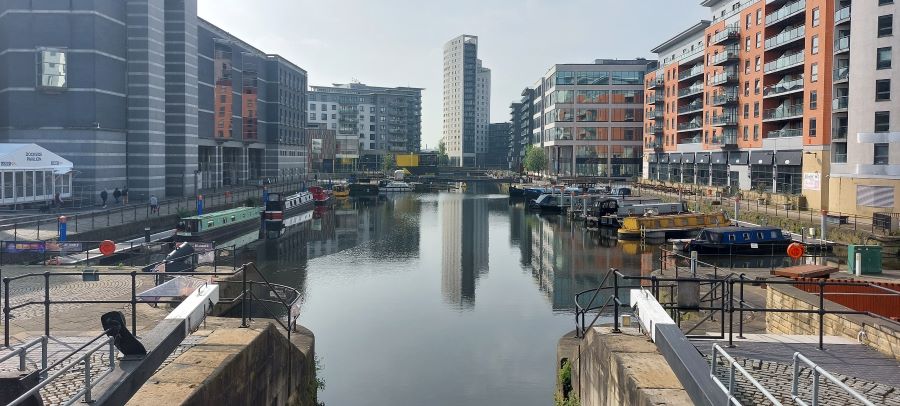
In May the History Group took a tour of the Leeds Dock area. Originally known as Clarence Dock, it was built in 1843 to serve traffic on the Leeds Liverpool Canal and the River Aire, mostly transferring goods between canal boats and river boats using the heavy crane which sat alongside the dock. The boats focused mainly on transporting coal from collieries around Rothwell and Wakefield to supply heavy industries in Hunslet plus many other varied businesses in Leeds including engineering, potteries, woollen mills, brewers and even steelworks.
Read More:-
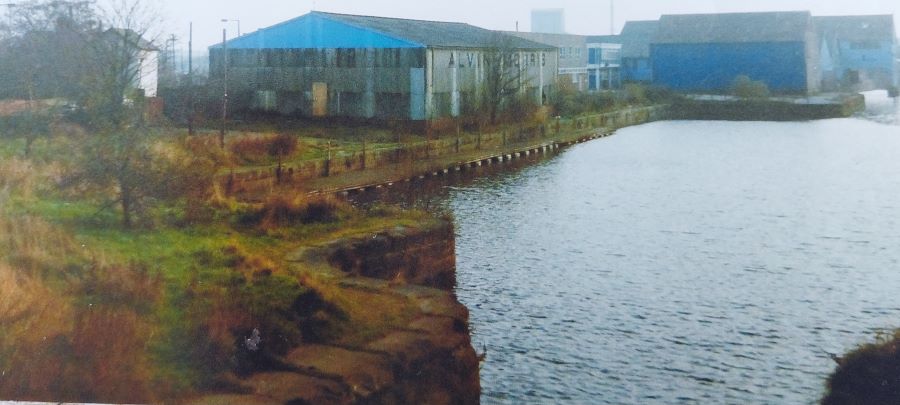
However, with the rise of the railways and the decline of inland water transport the dock eventually fell into disuse. Throughout the second half of the 20th century the area suffered a steady decline as the mills and heavy engineering works began to close, move further out of town or scale down until by the early 1990s it was a wasteland of derelict buildings.Construction of the £42.5 million Royal Armouries Museum, which opened in 1996, marked the start of the area's redevelopment. However further development was slow and it was another 8 years before the multi story car park was built, followed by a hotel in 2006. Since then, the area has been completely transformed and it now boasts an impressive array of fully occupied waterfront apartments as well as offices, shops and restaurants, including 11 digital and tech companies as well as Sky's Digital HQ.
Rebranded as Leeds Dock in 2013, it is now home to apx 1800 residents and an onsite workforce of over 2,000 people. Take a look at the before and after photos from almost the same spot!
Leeds Minster 10th April 2024
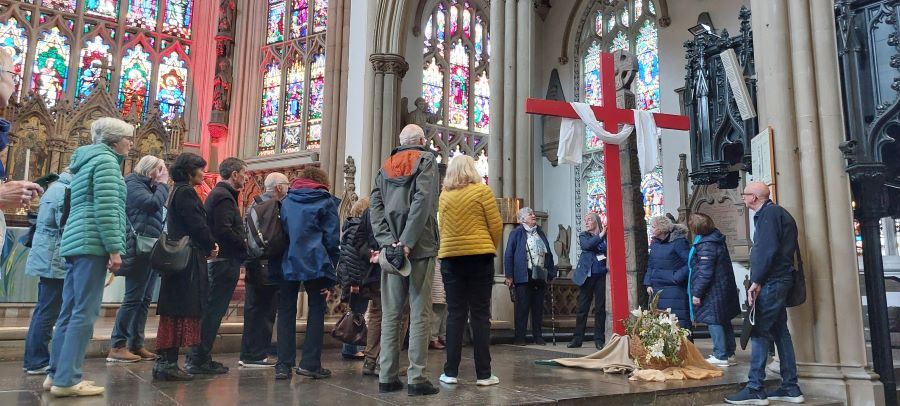
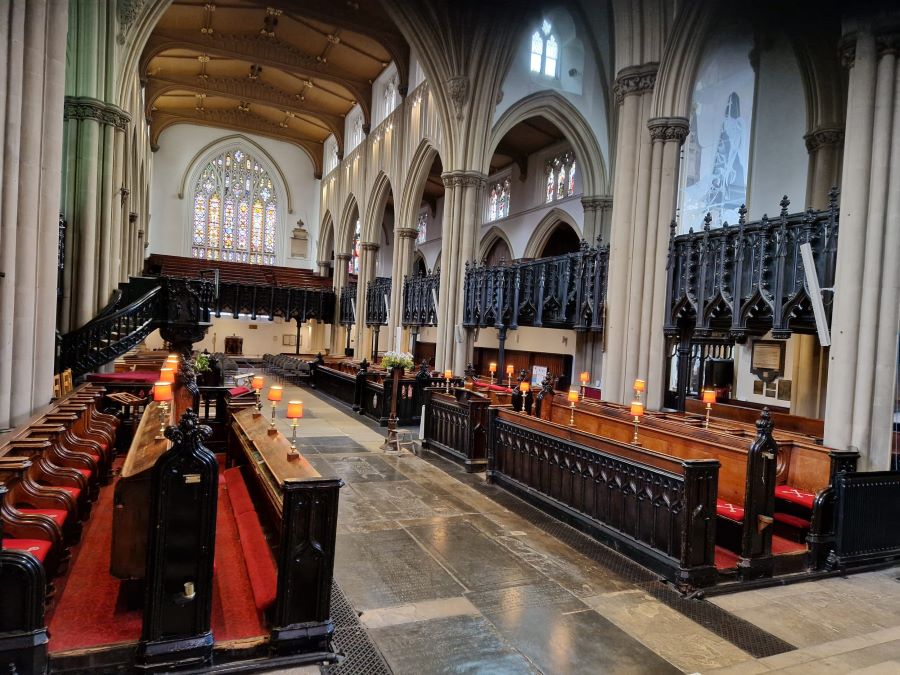
In April the History Group took a tour of Leeds Minster which until 2012 was known as Leeds Parish Church of St Peter and probably still is to many Leeds people. It stands on Kirkgate which is believed to be the oldest street in Leeds. The present church was consecrated in 1841 but it is the fourth church on this site, the first being built in the seventh century, meaning Christians have been worshipping here for around 1400 years.
Read More
The rebuilding was led by vicar Dr W F Hook, widely regarded as the country's greatest parish priest of the nineteenth century, both for his inspiring worship in church and his social work amongst the poor living nearby.
The church was built to hold 1,600 people but services regularly drew 2,500 with the poor occupying the ground floor and the rich in their privately rented pews in the large gallery.The oldest artefact in the Minster is the Leeds Cross which dates from the 10th Century. When the tower from the old church was taken down in 1838, the remains of this cross were found beneath it and were pieced together and placed on display where it can still be seen today.
Impossible to miss is the abundance of stained glass in a variety of styles and colours. Some is original to Dr Hook’s plan and other windows have been gifted in memoriam of family members by wealthy churchgoers. There is also a rare Elizabethan painted table-tomb complete with a skeleton carrying a spade to remind all observers of their mortality!
More recent history is recorded in a commemorative plaque to Captain Lawrence Oates (his family came from Leeds), who perished along with his 4 companions in 1912 on the ill fated Captain Scott expedition to the South Pole.
The Minster is well worth a visit on your next trip to Leeds.
Safeguarding Garforth Historical Society Archive 5th February 2024
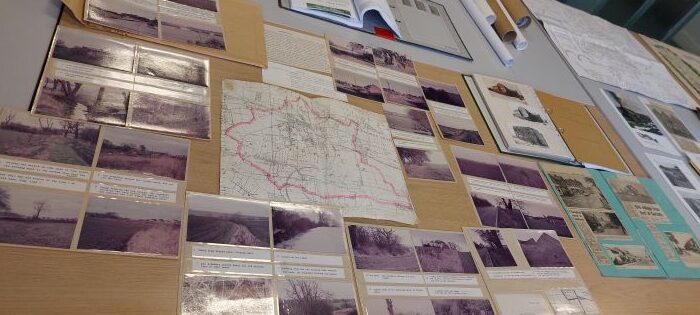
In February, the History Group enjoyed looking through some of the many items stored in the Local History section of Garforth Library. Our fellow U3A member, Tony Robinson, introduced the session and then along with History Group member, Carol Jinks, they introduced us to the many photographs, maps, newspaper cuttings, graveyard and census records which had been laid out for us all to view. It was explained that what we saw was only a fraction of what the library contains on the local history of Garforth and the surrounding area.
Read More
We were able to see how Garforth Main Street (or Briggate as it used to be called) looked before cars took precedence over people. We tracked the locations of mining tunnels and the old sand quarry (perhaps best not to know!). And we viewed a very detailed study of every grave in St Mary's churchyard, including photos and transcripts of the memorials - a project which must have taken many months work by a dedicated local historian. It was a treasure trove of information for us all and one attendee even came across information in the collection about their own relatives.

Visit to Kirkgate Market, 11th Oct 2023

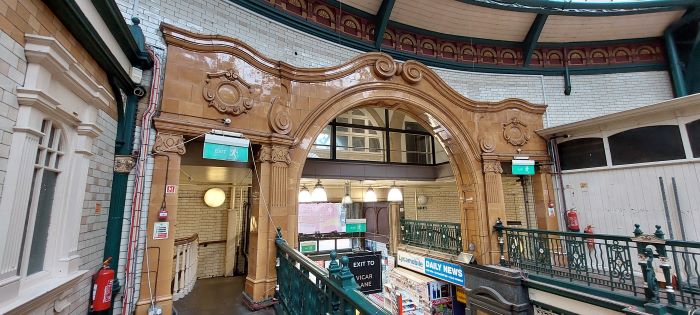
In October the History Group took a Heritage Tour of Leeds Kirkgate Market. Said to be the largest covered market in Europe, this Grade I listed structure currently hosts 245 businesses across the indoor and outdoor markets and averages about 138,000 visitors per week. Kirkgate Market has been on this site in its current form for 120 years but the first open air markets began here in 1822.
Construction of Kirkgate Market itself began in 1857 with further developments in 1875. When Leeds was granted city status in 1893 the area boomed and there was a desire for grand civic buildings. The area around the market needed some gentrification, surrounded as it was by slums and abattoirs. A design competition led to the building of the ornate 1904 hall.
MandS originated in Kirkgate Market in 1884 with their Penny Bazaar and in 1984, the MandS Centenary Clock was unveiled in the 1904 market hall to mark the anniversary. The original market clock on the same spot was removed in 1912 as it took up too much room - it is now known as the Oakwood Clock!
Fire rampaged through two thirds of the market in December 1975 but thankfully the 1904 hall was undamaged and reopened only three days later. The market has continued to evolve, surviving fire, supermarkets, new shopping centres, and covid. We finished our visit with a wonderful view from the balcony, which is not usually open to the public.
Markenfield Hall, Ripon 16th Aug 2023
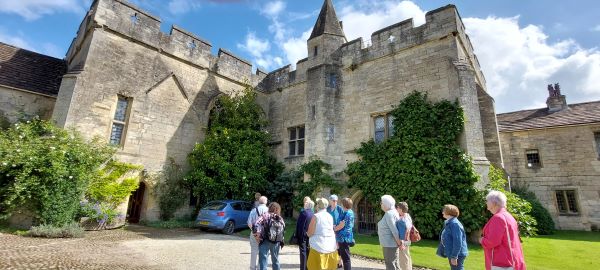
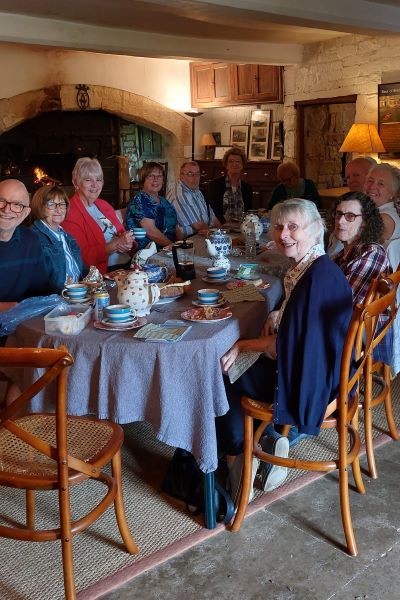
Markenfield Hall Group In August the History Group made a long anticipated visit to Markenfield Hall near Ripon. This very pretty medieval manor house is surrounded by a moat and is set in 600 acres of farmland.
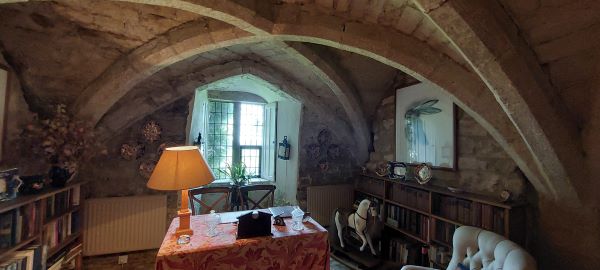
The first building on site appeared in 1230 as a 3 up 3 down stone structure with vaulted ceilings at ground floor level. Crenellations were added by Canon John de Markenfield in 1310 by permission of the Crown, giving it the look of a mini castle.
There were many extensions and alterations to the Hall over the next few centuries but sadly little is known about their history. This may be due to the staunchly Catholic Sir Thomas Markenfield's act of high treason in taking part in the Rising of the North in 1569, which supported placing Mary Queen of Scots on the English throne. As a result of this failed action, Elizabeth I swiftly confiscated the Hall and subsequently all the family papers were lost. Sir Thomas was lucky to escape a traitors death of being hanged, drawn and quartered by fleeing abroad but he died alone and in poverty in 1592.
In 1761 Sir Thomas Fletcher Norton, a direct descendant of the Markenfield family, bought the neglected house for £9,400. His most unusual renovation (to avoid spoiling the look of the house with downpipes) was an internal gutter system which collects water from the roof, runs right across the living room ceiling and shoots through the wall directly into the moat in an arcing flow! He later became Lord Grantley, First Baron of Markenfield, a title still held by the family and Lady Deirdre still lives at the Hall today.
We finished our visit with tea and cakes and decided that Markenfield Hall certainly lived up to its own marketing literature, which describes it as 'the loveliest place you've never heard of'

Sandal Castle 13th July 2023
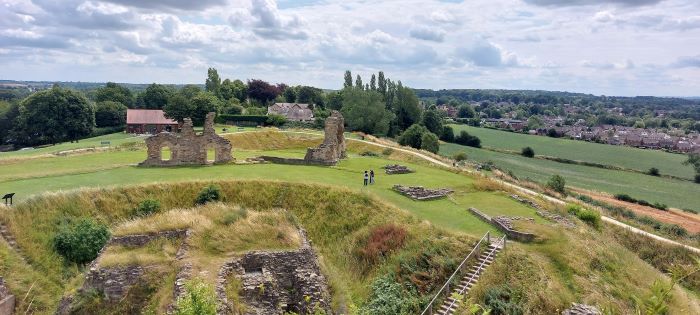
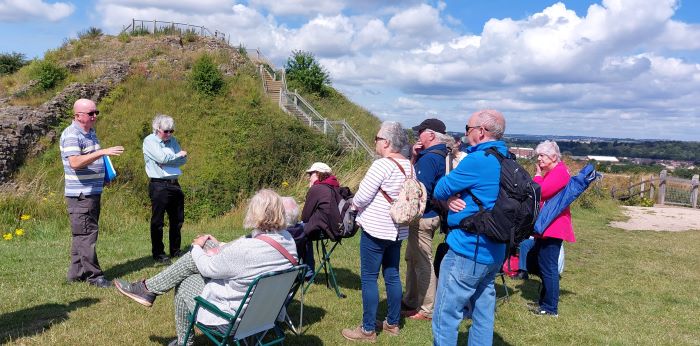
A blustery but thankfully dry morning found us taking a guided tour of the site, provided by Kevin and Alan who run their own website for both Pontefract and Sandal Castle. We heard a very comprehensive history of the site, it's owners and it's most famous role - at the Battle of Wakefield in December 1460.
The first and original timber built 11th Century Sandal Castle was a short distance away from the current one. However it was obvious why William de Warenne, owner of the Manor of Wakefield, chose to move it's location as the 'new' stone built castle, likely completed in the 13th Century, stands on the highest point in the area, commanding extensive views in all directions which is very handy when you want to keep your enemies at bay! The Castle was particularly difficult to storm, with a deep dry moat, an entrance route set on an angle and a total height of 83 feet from top to bottom.
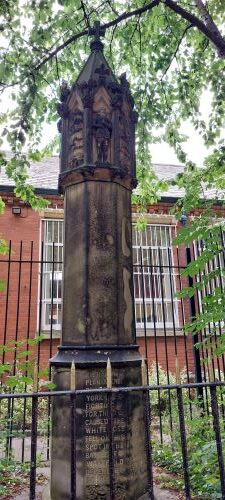
Sandal's major claim to fame was it's role in the Battle of Wakefield in December 1460, which formed part of the Wars of the Roses. The battle was fought on Wakefield Green just below the Castle and the Duke of York was mortally wounded, ending in a resounding Lancastrian victory. The place where he fell is marked a few hundred metres from the Castle.
Apart from a very short lived revival during the Civil War, the Castle has been left to decay for many centuries, with it's defences eventually stripped and much of the stonework robbed for other purposes. One now needs some imagination to picture the Castle in its glory, but the site (and the on site cafe) were enjoyed by us all.
Towton Battlefield 14th June 2023
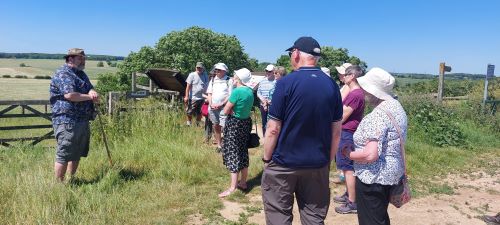
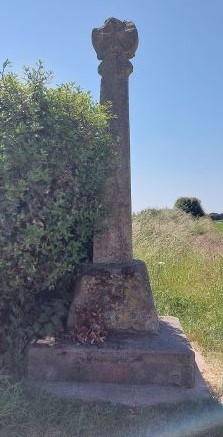
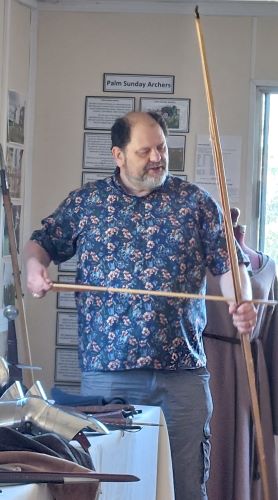
The History Group enjoyed a visit to the Towton Battlefield Visitor Information Centre and the battle site in June. A talk by Chris Berendt, Chairman of the Battlefield Society, explained how the armies of two disputed Kings of England fought all day in a freezing snowstorm on Palm Sunday, 29 March 1461.
The two rival Kings were Henry VI of the House of Lancaster and Edward IV of the House of York. Considered to be the bloodiest battle on English soil, 75,000 men fought that day but eventually the Yorkists emerged victorious. Allegedly 28,000 men from both sides lay dead on the battlefield, though this figure has been disputed by more recent historians.
The bloody battle and extraordinarily high death rate was attributed partly to the killing power of the medieval longbow. Trained from the age of 7, a longbowman could shoot an arrow from a 160lb pull longbow every ten seconds. If you survived the arrows then close quarters damage would be done by soldiers carrying a bill hook, poleaxe, sword or mace - all of which we saw in replica and they all looked horrific! In the end the Lancastrians were overwhelmed by the enemy, the terrain and no doubt the attrocious weather. They had to make a run for it but they didn't get far in their heavy, wet, woollen clothing or their cumbersome armour (only for the very rich of course).
The Yorkist victory set England on the road to a Tudor dynasty, but that's a whole other story...
Templenewsam -Object Handling 19th April 2023
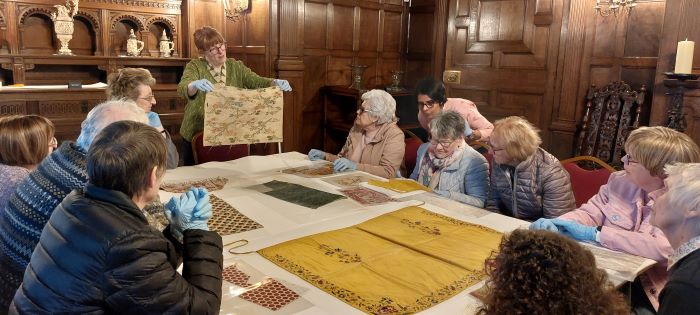
The History Group enjoyed an Historical Object Handling Session at Temple Newsam in April. We were able to get up close and personal with a large variety of precious ceramics and textiles. So precious in fact that the table had to be given a spongy tablecloth and protective gloves were essential wear for us all. We learnt about the development of ceramics through the ages by studying examples of different types, including both original Chinese porcelain and subsequent later British copies. The Far East guarded their production secrets so well that the West did not work out how to make porcelain for themselves until 700 years after China! The fabric samples we handled also explained the timeline of textile development. We examined woven and embroidered silks plus hand painted and block printed cottons. We were also able to look in detail at an 1830s young lady's dress and marvel at the tiny handstitching throughout the complexly structured garment. We learnt that in times gone by ladies garments didn't have pockets. Instead they had separately made pockets fastened to their waist under their dresses which they accessed via large slits in the folds of their skirts - an early form of handbag perhaps!


Hazelwood Castle and St Leonards Church 20th Feb 2023
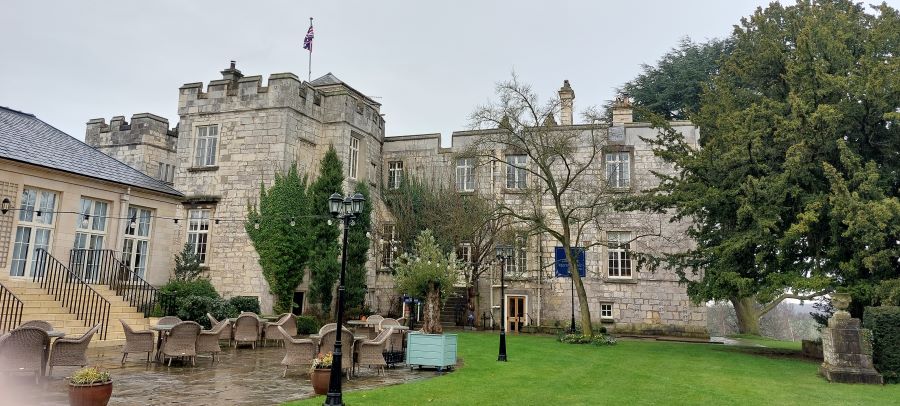
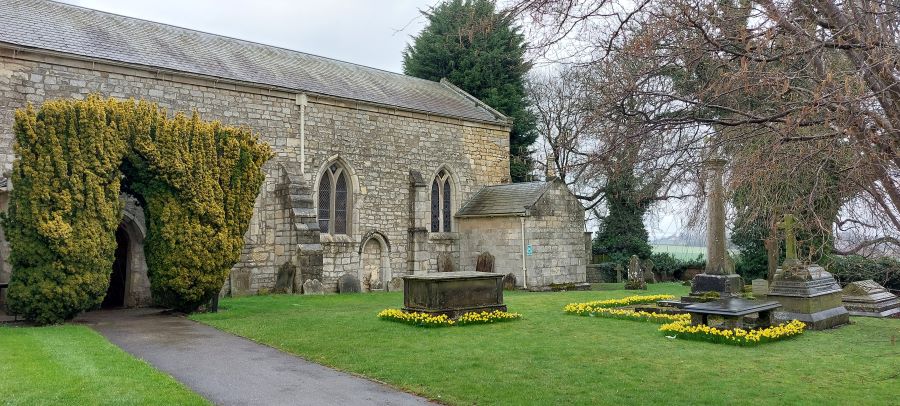
A dull rainy morning in March found the Group taking a History Tour of Hazlewood Castle and St Leonard's Church and what a lot of history there was! The first records of the house are to be found in the Domesday Book, described as being owned and occupied by Sir Mauger the Vavasour (a vavasour was a type of feudal liegeman). Hazlewood was then inhabited by descendants of the Vavasours for over 900 years.
In 1217 Robert Vavasour was Sheriff of York and his statue was placed above the door of York Minster, holding a block of limestone, in recognition of the fact that he gave stone from his Tadcaster quarry to maintain the cathedral. You can still see him there today.
Hazlewood is one of the oldest fortified houses to survive in the whole of Yorkshire and is Grade I listed. The site overlooked the battlefield for the Battle of Towton in 1461 and during the persecution of the Catholics through the reign of Henry VIII it provided refuge for Catholic priests. It is apparently to Anne Vavasour, Maid of Honour to Elizabeth I, that we must be thankful for Hazlewood surviving the reformation. Anne was able to use her influence at Court to save her Catholic family home from destruction.
The house continued to be owned and lived in by the Vavasours and underwent many alterations through subsequent centuries until eventually death duties took their toll and the Castle was sold in 1908. The Vavasours moved to New Zealand to become sheep farmers and wine producers!
After 1908 the site changed hands several times over the following years. Some people will know that Hazlewood was a Maternity Hospital during WW2 until 1953. One of our tour group was actually born there so he was able to revisit his own delivery room! More people may recall that Hazlewood was a retreat for Carmelite Friars between 1971 and 1997, after which it became a rather posh hotel which now makes its money by hosting weddings.

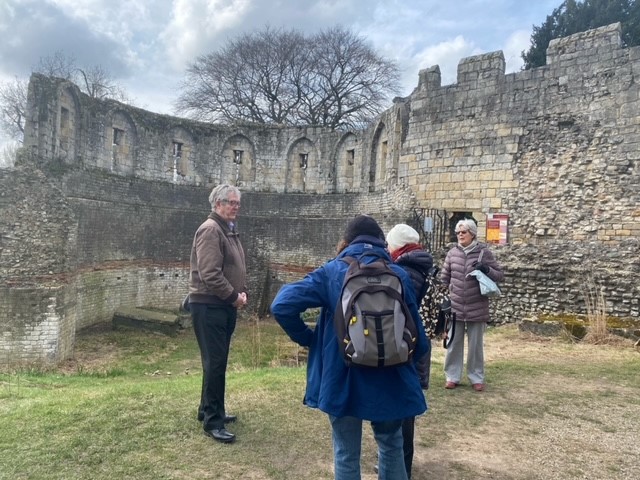
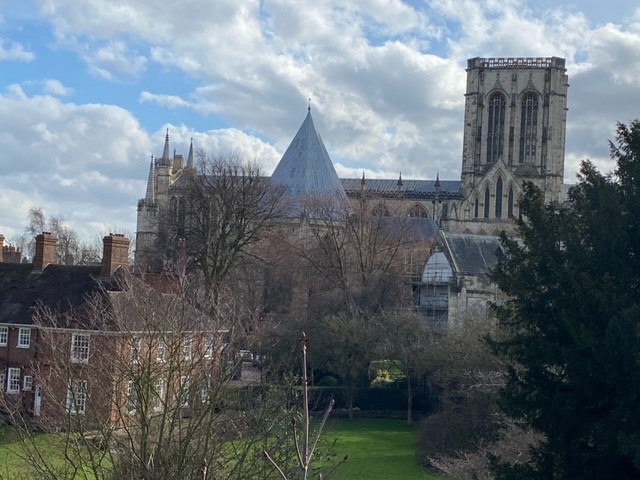
York Walls Visit March 2022


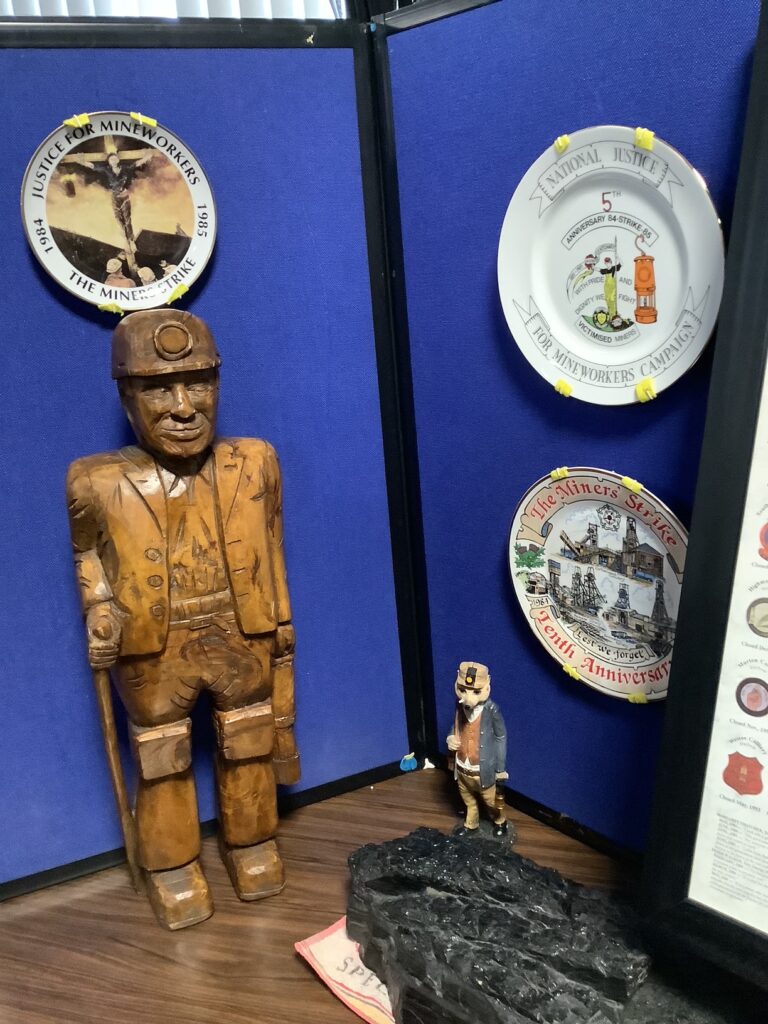
The exhibition was opened by Martin Eyre, Chair of the Kippax Parish Council. At the start of the exhibition Helen Pratt who previously worked for Leeds City Council at Temple Newsam House, as a member of the curators’ team, spoke about her involvement in the creation of the ‘Blot on the Landscape’ exhibition in 2019. From 1942 to 1984 there was open cast mining near Temple Newsam House which began because of the shortage of coal during the second World War. She explained that within Leeds City Council the idea of exploring this part of Temple Newsam’s history was controversial. Some people simply wanted to preserve the image of its Capability Brown landscaping. Developing the exhibition had involved not just staff at Temple Newsam but also miners themselves and volunteer researchers. Helen emphasised the importance of the area’s mining tradition being fully recognised in the work of Leeds City Council ‘s Museums and Galleries and said that had not always been the case. The Blot on the Landscape exhibition won the National Marsh Trust Award for Volunteers for Museum Learning. This is a British Museum award and recognised the strong community engagement evident in the work to create the exhibition. Helen was completely taken by surprise by this success and at the awards event had to improvise an acceptance speech as she had nothing prepared. Helen mentioned that the Blot on the Landscape exhibition would be returning to Temple Newsam and had resulted in the creation of the Temple Newsam Mining Trails. A booklet ‘Blot on the Landscape: The Collection’ was on display at the Kippax Coalmining Exhibition. This contained a variety of interesting material including the earlier history of mining on the Temple Newsam estate which probably began with ‘bell pits’ in and around the park before the 17th C. In 1815 a deep mine was sunk on the estate at Thorpe Stapleton. It was named Waterloo Colliery after the famous battle of the same year. It produced coal for over 150 years.The Kippax Coalmining Exhibition included various displays, put together by miners, of mining memorabilia such as miners’ lamps and commemorative plates. For example, Roger Monks, who played a leading role in mounting the Exhibition, combined photographs and models in his display, showing how mining had developed over the years from the very basic and risky ‘bell pits’ through the time of pit ponies to the pits of the post-nationalisation era using modern cutting equipment to extract the coal. He said that Lockdown had given him more time to work on his contribution. Another contributor highlighted the issue of children working in the pits. When legislation in the 19th C. outlawed young children working in the pits this was followed by a reduction in the number of accidents overall. It was thought that young children, not able to cope with the long hours or the working environment, were inadvertently contributing to accidents. Hearing miners talking informally at the exhibition there was concern about the importance of passing on the history of mining: ‘children are growing up not even knowing what coal is’. Also political views were in evidence and strong feelings were voiced about how the industry was treated in the period when Margaret Thatcher was Prime Minister and the 1984 Miners’ Strike took place. Positive experiences of the mining life were also recalled highlighting the camaraderie among miners.


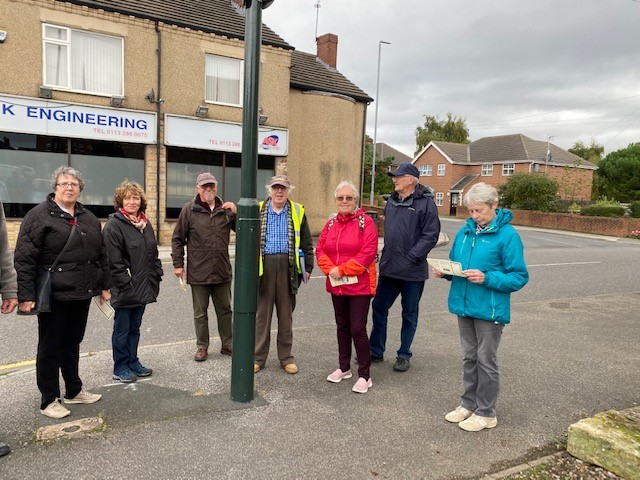
On Wednesday 13 October a group of us attended a walk, led by local resident and amateur historian Edgar Pickles, around Kippax High Street. This was very informative and please find a few notes below on the details (toggle the black arrow to continue reading)
we discovered, or remembered for some of the longer term Kippax residents! Kippax was a substantial village from before 1066 and evidence has been discovered showing that there were settlers on the site as long as 6,000 years ago. At the time of the Domesday Book in 1086 Kippax was listed as Chipesch which is believed to mean ‘Cippa’s Ash Tree’ (Cippa being an Old English personal name). The name has been used as a street name on a newish development on the site of the old Ash Tree School, Leeds Road near the library. It is thought that the Angles or English first arrived in the area in the 7th century AD. Kippax is thought to have been the administrative and ecclesiastical centre of a large Anglo-Saxon estate and, following the Norman Conquest of 1066, was the manorial centre for the Northern part of the Honour of Pontefract ( an area of land that covered about half of modern day West Yorkshire). 14th century tax rolls suggest that Kippax had a population equivalent to Leeds. The Church of St Mary Kippax, almost certainly exists on the site of an earlier church, possibly wooden, which was mentioned in the Domesday Book. Two fragments of an Anglo-Saxon cross shaft, thought to be part of an early 10th century cross, were found in the church in the 19th century. The church probably originated as a private chapel for an English lord but it is thought to have become a Minster church before the Norman Conquest. The ‘herringbone’ masonry visible on the outer walls is typical of 11th or 12th century building work. The church is Grade 1 listed as it remains relatively unaltered in size however the tower was not added until the 16th century and the pinnacles are 19th century. Local gentry, the Blands who resided at Kippax Park Hall, have a vault under the vestry with the remains of around 15 people. Manor Garth Hill (known locally as Cheney Basin), is a nationally important archaeological site. The earthwork remains of an 11th century ringwork and bailey castle are clearly visible next to the church. This may have been the site of an earlier high status English hall. The castle’s outer defences originally extended eastwards into what is now the churchyard. The Co-op is on the site of an old chapel and hall. The doctor’s next door is called Kippax Hall Surgery in reference to this. The Co-op building was originally GT Smith’s supermarket but there was a Co-op presence in the village previously as the Co-op butchers were located in a small lodge. The largest building in Kippax sadly no longer exists. This was Kippax Park Hall owned by the Bland family for many generations. Originally built in the 17th century, around the time of Sir Thomas Bland (1614-1657), the first Baronet Bland of Kippax Park, it was extended in the 18th century by the 6th Baronet, Sir John Bland. The family continued to live in the house until the death of John Davison Bland in 1928, after which the house and contents were sold, but it was left to become derelict and was eventually demolished in the 1950’s. (Leodis) A photograph is available on the Leodis website, see link below https://www.leodis.net/viewimage/113373 There are no remains of the actual Hall but a wall and gate posts are preserved near the War Memorial. The wall edged a very substantial deer park and had a 12 foot ditch on the inside to prevent the deer from escaping. This is perhaps the origin of the road name, Longdike (or Dyke) Lane. There is also a lodge which was built in the 19th century which still exists. The old fish and chip shop on the High Street had the last coal fired fryer locally. Almost opposite the old fish and chip shop at 105-107 High Street are the remains of the Pinfold which was where stray sheep and other animals were rounded up each evening. The owner would have to pay a fine to recover his or her animals. We then walked up Gibson Lane towards Kippax Central Working Men’s Club and onto Back Lane. Here, looking up New Street, we were advised that the nearby roads were built to follow the old field ploughing lines which was why they were curved at the end. This was very evident to the eye and can even be seen on street maps. There was an old Methodist Church at this location previously. We saw the entrance to a ginnel called ‘Jumbo’s Nick’ locally, supposedly due to an elephant from a travelling circus escaping and getting stuck at the narrowed end of the ginnel! The site of Truffles Restaurant is a late Tudor farmhouse, now a private residence. It still has a Tudor fireplace. The old, semi derelict building in the centre of the High Street, previously C& S Fashions, is Grade 2 listed and was built around 1750. It is still occupied. Moving down Butt Hill from Cross Hills we were able to see as far as Wakefield Cathedral. Most of the land between Brigshaw School and the rest of Kippax was mined and there were many small shallow coal mines. The Leeds to Selby railway went through Kippax mainly for the movement of coal. Roads were very poor and wealthier people would travel by train to Selby and then by boat to Hull and onwards to London. This was quicker and more comfortable than travelling by road. There was a bus terminus near the top of the hill but a small garden and plaque are all that remains. There were two blacksmiths and farriers in Kippax. The remains of a mounting block is visible outside the building which was Hick’s blacksmiths. Well Lane just below the library off Leeds Road leads down to a spring. Before mains water was available water was collected from the spring, often by children. Some of our group remembered doing this when they were young! There was a cinema in Kippax in the 1920’s building which is now occupied by a snooker cue business. Hand made cues are now produced there. There are numerous pubs in Kippax and we were given information on quite a few of them. The Commercial, previously known as The Medhurst Arms was a Bentley’s Yorkshire Breweries pub and was also a brew house meaning that it could not sell spirits or strong wine. There was a small pub and brew house at Bramham’s Yard called the Blue Anchor. The Old Tree Inn was also a Bentley’s pub and brew house. The inner door still retains a stained glass panel with the logo of the brewery. Bentley’s brewery was based in Oulton. The White Swan was built in 1915 on the site of an earlier White Swan pub. It is thought that the Manor Court was held at the previous premises. The Royal Oak was built by Edward Gray around 1700 as a private residence and was formerly known as Kippax House and it’s coach house was the building across Cross Hills now occupied by Best One. This is a Grade 2 listed building. It later became the Royal Oak which moved to this building from nearby. This has now reverted to residential use. Finally, although we did not see these buildings, there was both a watermill, located near the allotments on Station Road and mentioned in the Domesday Book, and a windmill. The windmill is known as either Kippax Mill or Boggat’s Mill and was used for grinding corn and was converted to steam power in the late 19th century. This is situated at Mill Farm on Longdike Lane and is Grade 2 listed. Another windmill was sited at Lime Hills in the late 18th century but did not appear on maps after 1878. All in all this was a very interesting walk and the weather was kind to us.


Treasures of Templenewsam 9th June 2021
Zoom Meeting
Adam Toole, Curator of Temple Newsam, gave an excellent talk about the treasures of Temple Newsam’s collections. This was well illustrated with some striking images which highlighted the detail of different pieces. The speaker emphasised the national importance of the paintings,furniture, silverware, pottery and wallpaper at Temple Newsam saying that together they constituted one of the finest collections of decorative arts in the country. He provided a brief outlineof the history of the House and went on to tell the rather surprising story of how the collections come to be what we see today.
In 1922 Leeds Corporation bought the Temple Newsam estate for £35,000 with the house itself (but not the contents) included in the deal. The entire contents of the house were offered for £10,000, but this offer was declined. The contents amassed over centuries were of course considerable and the ensuing sale when they were auctioned off and the house emptied took a number of days. Then
for the next 16 years, although looked after by the Corporation, the house stood more or less empty.
In 1938 Philip Hendy curator of the City Art Gallery became responsible for the House. He saw its potential as an art gallery and there were exhibitions featuring works by artists such as Henry Moore and Barbara Hepworth and it was interesting to see photographs of this period. This continued after the Second World War when Leeds was active in acquiring pieces in such areas as furniture, ceramics and silverware.
It was only later in the post-war era that a programme of restoration and repatriation was systematically pursued. Adam Toole mentioned the importance of the 1983-2005 period in this connection. Interiors of rooms were restored and refurnished to make them appear as they might have done when they were lived in. Also priority has been given to acquiring pieces which were in
the House when the contents were sold off. This policy of repatriation continues to this day.
A few of the Treasures that featured in the talk……. Chippendale Writing Desk.
Adam Toole judged that this was the most famous single piece in the House. A writing table originally made c 1770 by Chippendale for Harewood House where Robert Adam was responsible forthe interiors. At this time the neo-classical style, inspired by the architecture of ancient Greece and Rome, had come into fashion and Chippendale demonstrated his mastery of it. Marquetry was used for the decoration of the table and this also shows Chippendale’s alertness to shifts in fashion, because this technique had only recently been revived. Research has established that the original decoration of the desk made use of colour. The overall shape of the table suggests a triumphal arch,consistent with the neo-classical style. Murray cabinet.
In the Rococo style of the mid 17th C the Murray cabinet was probably made by the cabinet maker John Channon c1745 for the Perthshire family of that name. It is made of mahogany inlaid with elaborate brass decorations which are a prominent feature. Inside the cabinet are many compartments, some of which are hidden of course! Pascal’s Girandoles.
Although the family had lost money in the South Sea Bubble, Henry (7th Viscount) was determined to create an impressive Picture Gallery in a part of the House which had suffered a long period of neglect. This was successfully achieved in the 1740’s. In the 1990’s a programme of restoration was undertaken, which even included recreating the original green flock wallpaper. The original contents of the room were reassembled so that the room is now very much as it would have been when it was first created. So, it is possible to see the original vision – ‘a forest of mythology.’
James Pascal of Covent Garden supplied the many pieces of furniture which were required for the room (1745-47). A particular highlight of Pascal’s work are two large girandoles (candleholders).
These are very elaborate and in keeping with the mythology theme. They depict the story of Diana and Actaeon, a story from Ovid’s Metamorphoses in which Actaeon is transformed by Diana into a stag and killed by his own hounds. This is a reminder of the popularity and influence of classical literature at the time.
Picture of Lady Hertford
Joshua Reynolds painted Lady Hertford (then Lady Beauchamp) in 1777 when she was only eighteen. This is another instance of a work of art being repatriated and it is much loved. Reynolds was one of the foremost artists of his time and very popular with the upper classes. Lady Hertford developed a close relationship with the Prince Regent which lasted for thirteen years. But there is
uncertainty about how intimate this relationship was. She was an interesting character and had views about the politics of the day. Her attempts to play an active political role caused controversy. Her relationship with the Prince Regent ended in 1820.
Pan Music Stand
This music stand by Hugh Wedderburn was part of a commission to celebrate the tercentenary of Chippendale’s birth in 2018 This is a contemporary work, but its link to Chippendale and the reference to classical mythology means it speaks to Temple Newsam’s past. This elaborate work with its rich walnut finish displays a very high standard of craftsmanship. It is an example of the ongoing
commitment to add new acquisitions to the collections at Temple Newsam.
Notes by Colin Roberts, History Group Convenor
Lockdown Miscellany June 2020
During the Coronavirus Lockdown the usual meetings and visits of the History Group were suspended. This Miscellany arose out of Zoom and email exchanges when members were sharing thoughts about local features of interest. Additional relevant information about the topics was found online.
Toggle the Black Arrows to read the full report
Peckfield Colliery Disaster, commemorated in Micklefield churchyard.
Peckfield Colliery Disaster, commemorated in Micklefield churchyard.Lizzie M. ‘I went for a walk where I’d not been before and came across Pit Lane. I got talking to
someone about some lovely big old houses along there and was told they were the pit manager’s
house and some of the workers’ houses. I asked where the pit used to be and from there Googled
the information and found out about the disaster.’
Pat D. ‘Ashley Land is very knowledgeable about the Peckfield disaster. He has maps and history of
the men who lost their lives. He was able to show me my Great Grandfather’s statement on retrieving
his father’s body from the mine which was very moving.’
The Peckfield pit disaster was a mining accident at the Peckfield Colliery in Micklefield, which occurred on
Thursday 30 April 1896, killing 63 men and boys out of 105 who were in the pit, plus 19 out of 23 pit
ponies. The disaster is commemorated at Micklefield Church.
Peckfield Colliery was owned by Messrs. Joseph Cliff and Sons, with Mr. Joseph Cliff being senior
partner of the Micklefield Coal and Lime Company. Mr. Charles Houfton had been the manager since
the colliery opened, and Mr. William Radford had been employed as the Under Manager for 17
years. Despite seven fatal accidents in nineteen years, Peckfield was considered by miners to be a
safe mine. Ventilation was drawn through the seams by a Waddle fan (a large fan used in mines to
provide ventilation) at the top of the Upcast shaft, and had removed the eleven instances of small
escapes of gas since 1891. Men worked with picks by the light of tallow candles, whilst the
undermanager and five deputies carried safety lamps.
The explosion was caused by a slight fall in the roof in Goodall's gate, on the West side of the mine,
943 yards from the Downcast shaft. A small quantity of ‘fire-damp’ (flammable gas, particularly
methane) escaping from the crack in the roof was ignited by a miner's candle at 7:15am, just as the
men were starting work. No gas had previously been found in the New North Road or Goodall's Gate
in the West Level. Two miners and their ponies were killed at the point of impact, and four more
were killed as they began to flee. The explosion travelled south, down New North Road against the
air flow, as coal dust dislodged by the explosion carried the dull flame beyond its point of origin, and
expanded into a roaring flame when it reached the air in the West Level main intake, and then
continued to expand through the mine, killing miners and trapping them, as roofs fell. The explosion
tore through the stables, killing and burning the horsekeeper, plus 12 of the 14 pit ponies. The two
pit ponies who survived were stood in the middle, partly sheltered by the other ponies.
Augustus Walker Blue Plaque, Garforth. Carol J, Lizzie M .
Augustus Walker Blue Plaque, Garforth. Carol J, Lizzie M . Pat D. ‘I believe my Grandma was in service with Gus Walker’s family.’
This blue plaque commemorates Air Chief Marshall Sir Augustus Walker 1912-1986. (27 Lidgett Lane,
round the corner next to the back door.) The plaque reads: 'Was born in Garforth and brought up in
this house. Serving in the RAF 1934-70, he rose to its highest ranks. An inspirational figure, he led
daring bombing raids with 50 Squadron on industrial targets in Germany and commanded a series of bomber stations during World War II
Around Moorland Terrace, Garforth.
Carol J. ‘Moorland Terrace is the row of houses built by whoever lived in 9a Moorland Terrace, the
owners say there was a Gascoigne lived there, but it can't have been Isabella or Elizabeth as they
lived at Parlington/Lotherton. So it may have been a relative, I haven't found anything about it yetThe house must be about 1860s as our house (no 1 ) is 1870. There are quite a few Victorian houses
around here, on Lowther Avenue (technically a private road, part adopted) is Springfield Care Home
was originally in 'the doctor's house', Lowther House, and Springfield House extended to bridge
between the two. At the end is Churchfield House which looks late Victorian. (A friend lives there so
I'll ask her if she knows any history of it.) Looking at Ian Atkinson's* maps I realise that what was 3
Lowther Avenue ('Springfield') (which I said was part of the care home, certainly about 20-25 years
ago) was knocked down,10-15 years ago and the original house (named Lowther House on the maps)
had a massive extension built onto it, covering the site of Springfield.
(*Note. See https://www.ianatkinson.net/garforth/.)
Lidgett Lane apparently had an ' ancient gateway' at roughly the junction with Lowther Road, which
figures as Lidgett= lych gate. Old maps show a track going from here down to Wakefield Road and
the book, Manorial Garforth, mentions a Kyrkgatte, then Kirkgate, probably joining Church Garforth
with West Garforth and down to the Wakefield Road - look at Ian's maps and you'll see this looks
likely. From 'Manorial Garforth': 'The ancient, irregular and meandering crossroads lay close to the
entrance of the present Lowther Road. Here formerly stood a temporary gate, restricting the
movement of beasts, where Kirkgate met Lidgett Lane at the boundary beck.' That beck is now
culverted, piped under the end of the gardens of 1 and 3 Moorland Terrace on Lowther Rd side, and
open from 1 Lowther Road pretty much all the way to the Church Lane allotments by the ginnel.
Chantry Chapel of St Mary the Virgin, Wakefield
Wakefield had four chantry chapels (chapels endowed for the saying of masses and
prayers), three of which dated from the 13th century. They were built outside the medieval
town on the roads leading to Leeds, Dewsbury, York and Doncaster. The Chantry of St John the
Baptist was on Northgate, the road to Leeds, where Wakefield Grammar School stands
today. The Chapel of St Mary Magdalene was on Westgate where it crossed the Ings Beck on
the road to Dewsbury. St Swithun's Chantry Chapel, on the York road, was near Clarke Hall.
In the 14th century the Chantry Chapel of St Mary the Virgin was built on the medieval
bridge across the River Calder on the road to Doncaster and the south and only a stone’s
throw from the Hepworth Gallery. Wakefield's medieval nine-arched bridge is 320 feet
(98 m) long, was built in stone between 1342 and 1356. It replaced an earlier wooden
structure on the site of an ancient ford.
[8] The chapel on the bridge was licensed in 1356.
The Battle of Wakefield was fought about a mile south of the bridge in 1460 and the Earl of
Rutland was killed near the bridge while attempting to escape.
The chapel was used for worship until the Reformation and Abolition of Chantries Acts when
all Wakefield's four chantry chapels were closed. The bridge chapel survived because it is a
structural element of the bridge. After closure it was used as a warehouse, library, office
and cheese shop and survived bridge widening in 1758 and 1797.
The chapel was transferred to the Church of England in 1842 and the Yorkshire Architectural
Society, influenced by the Oxford Movement, persuaded to undertake its restoration. The
society, keen to restore medieval ecclesiastical remains, adopted designs by George Gilbert
Scott. Restoration costing approximately £2,500 (equivalent to £240,000 in 2019), was
carried out, resulting in the complete reconstruction of the chapel above pavement level.
The new west front differed slightly from its medieval predecessor. Scott is perceived as
having made two errors, the first was being persuaded to completely replace the old west
front. The second was having the new façade carved from Caen stone, which crumbled in the
polluted urban atmosphere and was completely replaced in 1939 in gritstone by ecclesiastical
architect Sir Charles Nicholson. The original richly carved medieval façade was moved to
Kettlethorpe Hall, where it became the frontage to a folly boathouse.
The chapel opened for Anglican worship in 1848 and was used as the parish church of the
newly formed ecclesiastical district of St Mary until a church was built in 1854. The bridge
chapel became a chapel-of-ease and services were held irregularly. St Mary's merged with St
Andrew's, Eastmoor in the 1960s and the impoverished parish struggled with the chapel's
upkeep. In the 1980s it seemed likely the chapel would be declared redundant by the
Church of England. In January 2000 a parish boundary change brought the chantry into the
care of Wakefield Cathedral.
Kippax Castle, Kippax
Colin R. ‘Through my family I have a connection with the Church of St Mary's in Kippax and so I
have attended services and events there. Because of this I am familiar with the earthworks
adjacent to the church which mark the site of Kippax Castle. This is a good illustration of how,
following the conquest, the Normans systematically imposed their authority on England village by
village.’
Kippax was an important manorial centre prior to the Norman Conquest. It comprised, not only
Kippax itself, but also the townships of Ledston and Barwick in Elmet, as well as parcels of land
in other townships in the locality. Kippax may have been the site of an Anglo-Saxon Minster or
mother church which would be responsible for the spreading of Christianity through the region
via a network of ‘daughter houses’.
After the Conquest William gave Kippax to Ilbert de Lacy as part of a vast manorial holding called the
honour of Pontefract. The importance of Kippax in pre-Conquest times led the de Lacys to establish
the castle at Kippax to act as the administrative centre for that part of the honour. It continued to
perform this function until the late 12th century when the role was transferred to Barwick in Elmet.
The most visible survival of the castle today is a circular earthwork known locally as “Cheney Basin”.
This is all that remains of the shell keep established on the site. There are antiquarian reports of
stonework being visible under the embankments but a recent geophysical survey failed to identify
any such remains. It therefore seems likely that the keep was originally a wooden structure and was
never rebuilt in stone.
Manor Farm Experimental Agricultural College
ADDENDUM TO THE 'LOCKDOWN MISCELLANY', JUNE 2020.
An additional contribution to the Miscellany from Chris L.
Manor Farm Experimental Agricultural College, Garforth.
Background
The farm is situated about a mile north of Garforth railway station along the Barwick
Road and can be identified as the Manor House on the OS map.
The industrial revolution in England in the 18th and 19th centuries affected many parts
of the country and Leeds participated fully. This was initially in the textile industry,
mainly wool and flax production, processing and marketing. These were quickly
followed by engineering, iron foundries, mining expansion etc.
The rapid increase in industrial employment opportunities led to a corresponding
population increase. The population of Leeds in 1800 is quoted as 30,000, this
more than tripled to 101,000 by 1850 and to over 160,000 at the 1881 census.
Increased food production was central to feeding the increased population.
The agricultural revolution of the 17th and 18th centuries paved the way for the
industrial revolution with the increase in both population numbers and health. In the
nineteenth century agricultural production was improved by enclosing the land, to
give greater management opportunities and possibly tenancy security. Other
innovations included land tillage, manuring and fertilization of land, plant and animal
breeding, crop rotation, mechanisation etc.
Not least among the food improvement innovations introduced was the recognition of
the importance of agricultural education and training. This had to improve beyond its
existing “sitting-with-Nellie”, i.e. often poor quality on the job training which had
sufficed for centuries, to more formal institutional training.
Agricultural training in Leeds
The first agricultural training institute in England was the Royal Agricultural College
in Cirencester (Gloucestershire) which started training students in 1845. It catered
largely for the sons of the gentry and did not have formal links to a full university.
The Yorkshire College of Science was formed in Leeds in 1871 mainly to support the
wool and textile trade and to meet the technological demands of the fast-changing
city. This undertook teaching and scientific research with no bar to students’
religious or class affiliation. In 1884 this joined with the Leeds School of Medicine
and other institutions to form the Yorkshire College which in turn became Leeds
University in 1904. Women were admitted to Leeds College but not initially to the
University.
In 1891 a department of agriculture was inaugurated as one of the technical sections
of Yorkshire College. As well academic training in agriculture from the city-based
college, a farm was required to provide the practical training and demonstrations in
agriculture. There was also a developing awareness of the need for field based
agricultural research.
:
Manor Farm, on the Parlington Estate near Garforth, was eventually identified to
provide these functions. In 1898, the East and West Riding County Councils took
out a 30-year lease on this farm on behalf of the College. Colonel Frederick R T
Trench -Gascoigne had inherited the estate in 1893 and the family’s interest in and
desire to support public services including agriculture is well known. It is reasonable
to assume that they took a personal interest in facilitating the tenancy
The farm is situated about a mile north of Garforth railway station along the Barwick
Road and can be identified as the Manor House on the OS map.
Work was started immediately to adapt and add to the existing farm buildings. The
farm consisted of 312 acres divided as two thirds arable land, and the rest grassland.
Some of the land adjoining the educational building, erected in 1901, was set out in
plots. These plots were similar to those used for evening classes, in the area, and
teachers briefed in their use. The scheme was funded by the three Yorkshire Ridings
The educational building itself was designed by a firm of Leeds architects and built
by a Barwick in Elmet contractor. It was officially opened by The Earl Spencer,
Chancellor of the Leeds Victoria University, on the 28th June 1901. The federal
Victoria University (combining higher education in Leeds, Manchester and Liverpool)
eventually combined with the Yorkshire College to form Leeds University.
A Leeds University booklet published in 1908 describes the Manor Farm buildings
as simple in design and carried out in pressed brick with a few stone dressings.
There were two separate blocks comprising the farmhouse together with barns and
outhouses plus another block which housed the education department. The
education department comprised lecture rooms, laboratories, a seed room,
bacteriological room, and separate sitting rooms for men and women students.
Students were taught practical agricultural skills and given experience in a proper
working farm environment. Agricultural training was offered at purely vocational
non certificated levels such as dairy technology up to part of the BSc degree.
Research trial programmes listed in 1926 included potato variety trials, further
experiments with human food crops such as cereals and potatoes and animal food
crops like mangelwurzels. Fertilizer trials included basic slag and limestone soil
dressings and manure treatment of grass leys.
A fuller list of training and research programmes is given on line as extensively
archived at Leeds University.
The lease expired in 1928 and was not renewed as the area was considered
unsuitable due to the acid atmosphere. The work was transferred to other sites
including Askham Bryan Agricultural College near York and the three farms on the
Headley Hall estate near Bramham Park.
The farm and land were returned to the Parlington Estate and sold at auction,
together with six other farms, on October 2nd 1964.
https://www.parlington.co.uk/outlying_houses_h13.html.
The buildings were demolished in 1970.
Information regarding the purchase and operation of the farm is taken from various
publications by the Barwick in Elmet Historical society plus photographs and further
information from the Leeds photographic collection. The websites are as follows:
Barwick in Elmet Historical Society
http://www.barwickinelmethistoricalsociety.com/5032.html.
and the Leeds photographic collection
http://www.leodis.net/display.aspx?id=201021_170194
http://www.leodis.net/display.aspx?id=2004318_54226321
In summary these references describe the purchase of Manor Farm and its
subsequent operation and show some photographs of the land and buildings.
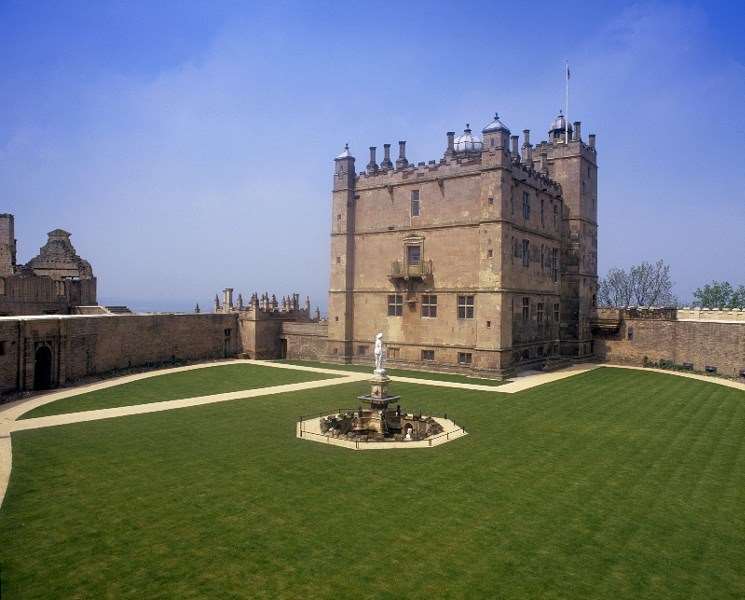
Bolsover Castle 26th February 2020
For February 2020 we are looking at visiting Bolsover
Castle instead of having ameeting. The castle is in the town of Bolsover, Derbyshire. Its an English Heritage property about 45 miles from Garforth and so a bit further than other places we have visited so far. We will organise car share arrangements. One advantage is that it is
straight down the A1. We are planning to go on the last Wednesday in February which is the 26th when the castle will have reopened on weekdays. The cost of admission and an audio tour is £14.30 for under 65's and £13.10 for over 65's. Not cheap, but an interesting property and a party of 11 or more is entitled to a 15% discount! There is a café. A bit about the castle. Bolsover castle was founded in the late 11th century by William Peveril, one of William the Conqueror's knights, but it was neglected fromthe mid-14th century. Its ruins provided the setting for the Little Castle begun in 1612 by Sir Charles Cavendish as a retreat from his principal seat at Welbeck, a few miles away. When Charles Cavendish died in 1617 most of the structure was finished. His son William – playboy, poet courtier andlater first Duke of Newcastle –inherited the Little Castle and completed the interiors with the help of the architect John Smythson. What resulted was a kind of ‘toy keep’, housing tiers of luxurious state rooms. The exquisitely carved fireplaces, richly coloured murals and panelling of its beautifully restored interiors still take the visitor on an allegorical journey from earthly concerns to heavenly delights.' (Extract from the English Heritage website where of course there is more information.) There are connections with Charles I's reign and the English Civil War.If you are not a member of the History Group but you are interested in this visit please get in touch by sending a message to the History Group Convenor

Lotherton Hall 21st August 2019
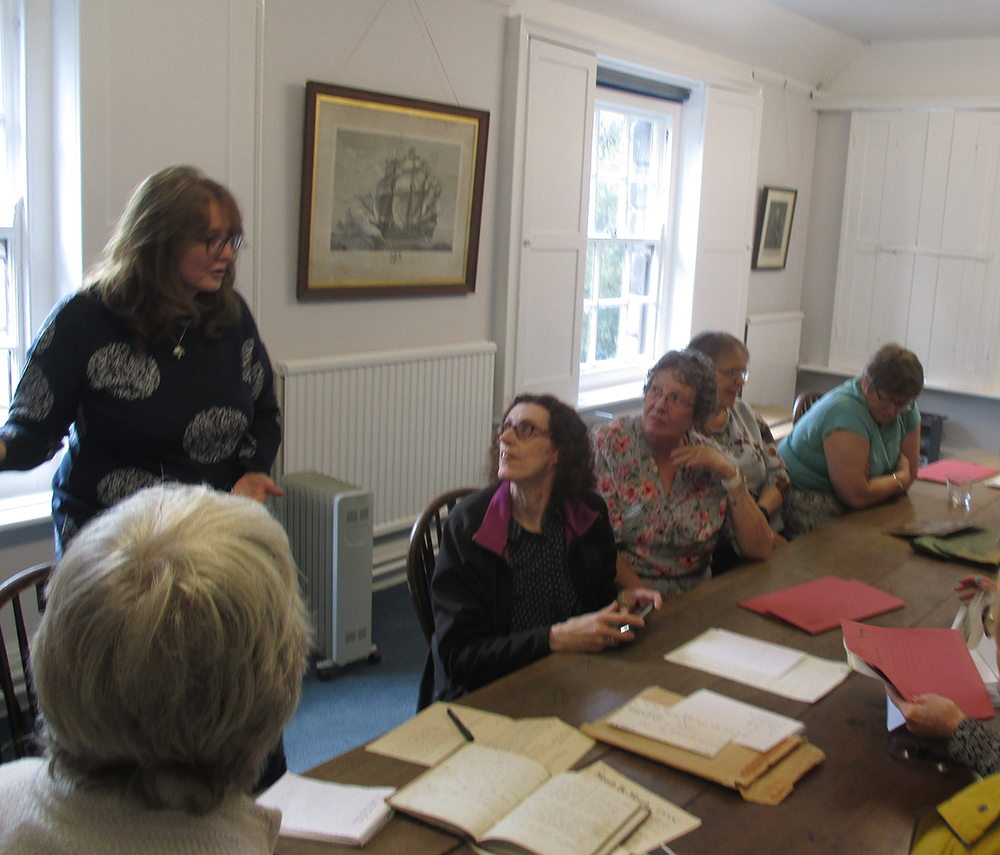
The U3A history Group visited Lotherton Hall, the last home of the Gascoigne family, We saw an exhibition dedicated to Captain Douglas Gascoigne (Coldstream Guards) the last son and heir of the Gascoigne family. Douglas was part of the 1944 WW2 battle to take Normandy and was killed in a tank battle near Caen on 6th August just two months after the D day landings.The main purpose of the History Group visit was to view the archives which document the history of the Gascoigne family.The photograph shows members of the history group together with Stephanie Davies, the Assistant Curator at Lotherton Hall. Sir John Gascoigne Sir John Gascoigne, the first Baronet. He purchased the title in 1635 at a cost equivalent to £5m in today's money. The title was conferred by Charles 1. The money went into a fund for developing the North American colonies. Sir Thomas Gascoigne Sir Thomas Gascoigne, the eighth and last Baronet, as a man of the Enlightenment. He inherited the title in 1762. Later he gave up his Catholic faith. This meant he could take a more active role in public life, including becoming an MP. In October 1809 Sir Thomas' son and heir died in a hunting accident. This was a great personal blow for Sir Thomas and he only outlived his son by four months. With no heir the Baronetcy lapsed.
Selby Abbey Visit 10th July 2019
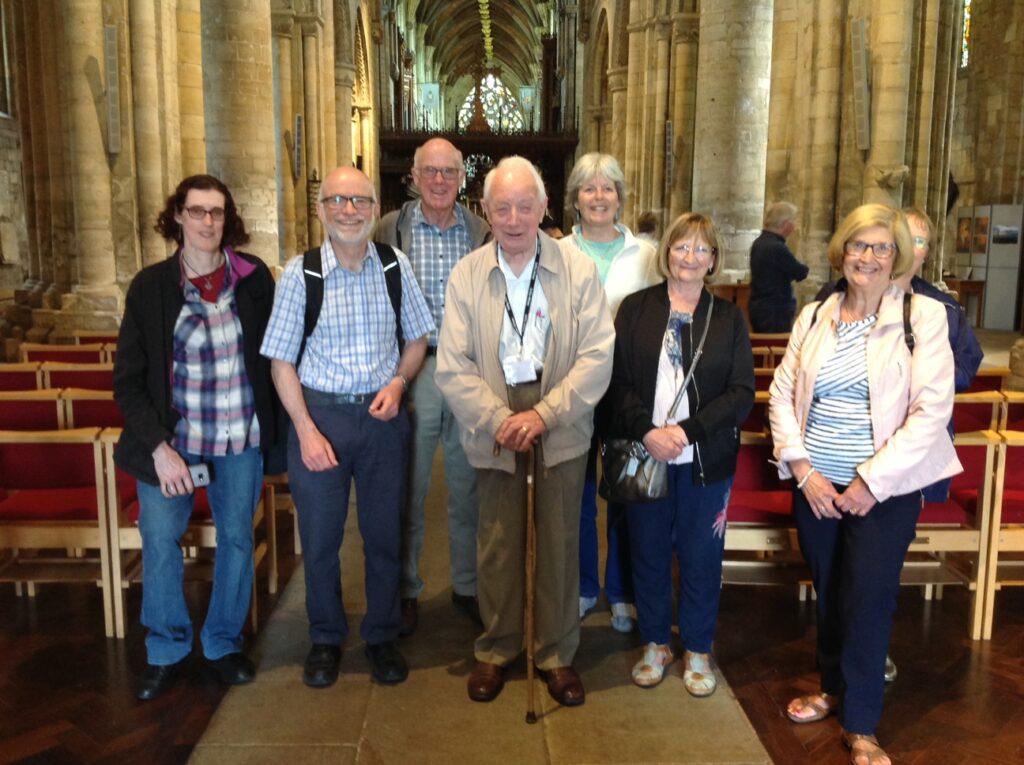
On 10th July 2019 the Group paid a visit to Selby Abbey, enjoyed a full guided tour and learnt about the Abbey's history including the connection between the Abbey and important historical events.
The following notes hopefully provide a reminder and some brief outline of those major events and are intended as a starting point to find out more! William the Conqueror, the Norman Conquest and the founding of the Abbey. (toggle the black arrow to continue reading.)
There is a close link between the Norman conquest of 1066 and the foundation of Selby Abbey. Although William the Conqueror was victorious at the battle of Hastings and crowned king of England, many nobles in the north ofEngland did not accept him as their king. William had to come north with his army and established his authority with great ruthlessness - the 'Harrowing of the North'.A link was established with Selby because William's wife, Queen Matilda, who had also made the journey north is believed to have given birth to a son in the town. William had already founded Battle Abbey following his victory at Hastings.
The creation of an abbey at Selby in thanksgiving for his success in subduing the north and in light of other favourable omens appeared a natural conclusion. King William gave a charter to a monk called Benedict granting hima site on which to build an abbey. He was subsequently ordained by the Archbishop of York as the first Abbot of Selby Abbey. The first Abbey was builtin wood and it was Benedict's successor, Abbot Hugh, who was responsible for building the stone Abbey. The building carried out in Abbot Hugh's time was in the Norman style. Continuing work was carried out on the Abbey over lengthy periods and this reflected changing styles. Nevertheless, in parts of the Abbey the Norman style is still clearly visible.Henry VIII's religious reforms and the dissolution of the monasteries. When Henry VIII's marriage to his first wife, Catherine, failed to produce a male heir he sought to have the marriage annulled by the Pope. When this was refused the ensuing confli ct with Rome escalated and in the 1530's acts were passed by Henry that ended papal authority over the church in England andmade the king its head. This wastaking place against the background of challenges to the authority of the Pope elsewhere in Europe.
In 1535 Henry turned his attention to the monasteries which had considerable wealth at that time, when Henry himself was in financial difficulties. A programme of closing the monasteries began.Henry benefitted by appropriating their income and disposing of their assets. As the programme progressed feelings ran high in some areas and in the north of England a movement emerged which became known as the 'Pilgrimage of Grace' aimed at resisting the changes. This won the support of many prominent families and included Lord Darcy, Selby Abbey's High Steward. Representing Henry, the Duke of Norfolk met with the leaders and gave assurances which placated them. Henry later went back on his assurances and many involved were subsequently executed, including Lord Darcy.
In December 1539 a group of Henry's commissioners who were visiting the area confirmed the closure of Selby Abbey. The monastery buildings were extensive. The Abbot's house and many other buildings were pulled down orfell into ruin. However, in keeping with established local tradition, the Abbey church survived as the parish church of Selby. This was unofficial at first but legalised in 1618. This was in contrast to monasteries such as Fountains and Rievaulx where the Abbey churches fell into ruin.
The English Civil War.
A period of political and religious discord in the 1630's which affected Ireland and Scotland as well as England led to direct conflict in 1641 between the king,Charles I, and Parliament. This escalated to the point where civil war broke out in 1642. Oliver Cromwell was a senior commander in the Parliamentary army('Roundheads'). In Yorkshire the parliamentary forces were led by Lord Fairfax who was in Selby in December 1642 and he ensured the town's defences were reinforced. The following year there was a confrontation between
Parliamentary and Royalist troops ('Cavaliers') in Selby market place and in the winter of 1643-4 the Royalists used Selby Abbey to barrack troops and stable horses. The Abbey Guide mentions vandalism to the Abbey by both sides and
the loss of much medieval stained glass. In 1644 Fairfax defeated the Royalists and drove them out of Selby. In July of the same year the battle of Marston Moor where Cromwell himself took part resulted in an important victory for the Parliamentary forces.
In January 1649 Charles I was put on trial for treason and other crimes and executed at the Banqueting House in London. This was very controversial even among supporters of the Parliamentary cause. Fairfax was not alone in staying away.
The 1906 fire
With regard to the Abbey's later history it is important to mention the fire of 1906 which caused considerable damage. As the Guide points out the easy option would have been to settle for a response to the fire which would only have restored part of the building creating a church on a much smaller scale. Instead a comprehensive programme of rebuilding and restoration was carriedout so we can still enjoy the Abbey in all its splendour today.
Sources.
Henry Farrar. 'A Guide to the Abbey Church of Selby which is dedicated to Our Lord Jesus Christ, Saint Mary the Virgin and Saint Germain'. (Selby Abbey 1989.)
Robert Tombs. 'The English and their History'. (Allen Lane 2014.)
Ingrid Barton. 'The Little History of Yorkshire'. (The History Press 2018.